
Contents
- 🌋 What Exactly Is a Volcanic Eruption?
- 📍 Where Do Eruptions Happen?
- 💥 Types of Eruptions: A Spectrum of Fury
- ⏳ Eruption Cycles: From Dormant to Devastating
- 📈 The Science Behind the Smoke: Magma & Pressure
- 🌍 Global Impact: From Local Devastation to Climate Change
- ⚠️ Predicting the Unpredictable: Early Warning Systems
- 🛡️ Living with Volcanoes: Safety & Preparedness
- Frequently Asked Questions
- Related Topics
Overview
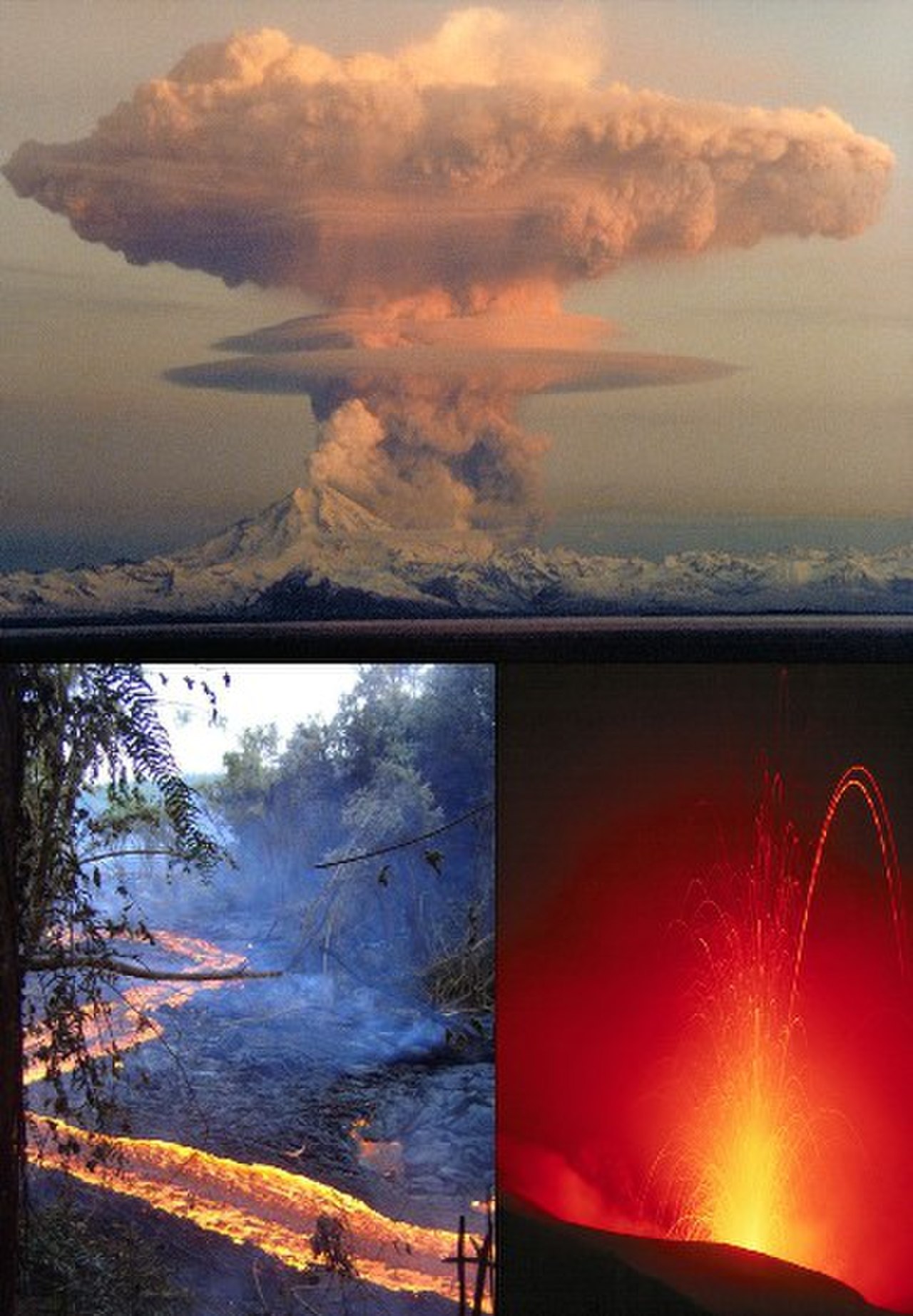
Volcanic eruptions are dramatic geological events where molten rock, ash, and gases are expelled from a volcano's interior onto the Earth's surface. These events, driven by immense internal pressure, can range from gentle lava flows to catastrophic explosions that reshape landscapes and impact global climate. Historically, eruptions have been both feared and revered, influencing human settlement patterns, mythology, and artistic expression. Understanding the mechanics of magma formation, eruption styles (like Plinian or Strombolian), and the resulting hazards (pyroclastic flows, lahars, ashfall) is crucial for hazard mitigation and appreciating Earth's dynamic processes. The study of volcanism offers insights into planetary formation and the potential for life in extreme environments.
🌋 What Exactly Is a Volcanic Eruption?
A volcanic eruption is Earth's dramatic release of subterranean heat and molten rock. It's not just lava; think ash, gases, and rock fragments violently ejected from a vent or fissure. This process is driven by immense pressure building beneath the surface, forcing magma, or molten rock, upwards. The scale can range from gentle lava flows to explosive blasts that reshape landscapes. Understanding the mechanics of these events is crucial for anyone living near or studying these geological titans.
📍 Where Do Eruptions Happen?
Volcanic eruptions are intrinsically linked to tectonic plate boundaries and hotspots. The 'Ring of Fire' encircles the Pacific Ocean, accounting for about 75% of the world's active volcanoes, including iconic sites like Fuji in Japan and St. Helens in the USA. Other significant volcanic regions include the Mid-Atlantic Ridge, the East African Rift Valley, and island arcs like those in Indonesia. While many eruptions occur in remote locations, the proximity of major population centers to active volcanoes makes their study a matter of urgent public safety.
💥 Types of Eruptions: A Spectrum of Fury
Volcanologists classify eruptions based on their intensity and eruptive style, often naming them after famous volcanoes. The gentle, effusive Hawaiian are characterized by fluid lava flows, while the more explosive Strombolian produce rhythmic bursts of incandescent cinders. Vulcanian are short, violent explosions of viscous magma, and the terrifying Plinian, like the one that buried Pompeii, involve sustained, powerful blasts of gas and ash that can reach stratospheric heights. Each type presents unique hazards and requires distinct monitoring strategies.
⏳ Eruption Cycles: From Dormant to Devastating
Volcanoes don't erupt constantly; they operate on cycles of activity and dormancy. A volcano might be quiet for centuries before a major eruption, or it could exhibit frequent, smaller events. The duration and intensity of an eruptive period vary wildly. For instance, Kīlauea in Hawaii has been in near-continuous eruption for decades, albeit with varying styles, while Pinatubo in the Philippines had been dormant for centuries before its cataclysmic 1991 eruption. Understanding these cycles is key to assessing future risk.
📈 The Science Behind the Smoke: Magma & Pressure
The engine room of an eruption is the magma chamber, a reservoir of molten rock beneath the Earth's crust. As magma rises, dissolved gases within it expand, increasing pressure. When this pressure overcomes the strength of the overlying rock, an eruption occurs. The viscosity of the magma, determined by its silica content, dictates the eruption style: low-silica magma is fluid and leads to effusive flows, while high-silica magma is viscous and traps gases, leading to explosive events. Volcanology is the science dedicated to unraveling these complex processes.
🌍 Global Impact: From Local Devastation to Climate Change
The impact of volcanic eruptions extends far beyond the immediate vicinity. Large eruptions can inject massive amounts of ash and sulfur dioxide into the atmosphere, causing significant global cooling for years, as seen after the Tambora eruption in 1815, which led to the 'Year Without a Summer'. Locally, eruptions can destroy infrastructure, contaminate water sources, and trigger devastating lahars (volcanic mudflows). The economic and social disruption can be profound, affecting agriculture, transportation, and public health for extended periods.
⚠️ Predicting the Unpredictable: Early Warning Systems
Predicting volcanic eruptions remains one of the greatest challenges in earth science. Scientists employ a suite of monitoring techniques, including seismic monitoring to detect earthquakes beneath the volcano, GPS and tiltmeters to measure ground deformation, gas emission analysis, and thermal imaging. While pinpointing the exact timing of an eruption is often impossible, these methods can provide crucial early warnings, allowing for evacuations and mitigation efforts. The success of these systems is vital for saving lives, as demonstrated by the preparedness for the Rainier volcano.
🛡️ Living with Volcanoes: Safety & Preparedness
Living in proximity to active volcanoes requires a proactive approach to safety. Understanding local hazard maps, which outline areas prone to lava flows, ashfall, and pyroclastic flows, is paramount. Establishing and practicing evacuation plans, having emergency kits ready, and staying informed through official channels like the USGS are essential steps. Community engagement and education are critical components of effective preparedness strategies, fostering resilience in the face of these powerful natural forces.
Key Facts
- Year
- Ongoing
- Origin
- Earth's Mantle
- Category
- Natural Phenomena
- Type
- Topic
Frequently Asked Questions
What is the difference between magma and lava?
Magma is molten rock found beneath the Earth's surface. When magma erupts onto the surface, it is then called lava. The composition and temperature of magma influence the type of eruption that occurs. Understanding this distinction is fundamental to grasping volcanic processes and their resulting hazards.
How often do volcanoes erupt?
The frequency of volcanic eruptions varies greatly. Some volcanoes, like Kīlauea in Hawaii, erupt almost continuously, while others may remain dormant for hundreds or even thousands of years between eruptions. Globally, there are typically around 50-60 eruptions per year that are significant enough to be noticed.
Can volcanic eruptions be stopped or controlled?
Currently, there is no known way to stop or control a volcanic eruption once it has begun. The immense forces involved are far beyond human capability to manage. Efforts focus on monitoring, prediction, and mitigation of the hazards associated with eruptions, rather than attempting to prevent them.
What are the main hazards associated with volcanic eruptions?
The primary hazards include lava flows, ashfall, pyroclastic flows (fast-moving currents of hot gas and volcanic matter), lahars (mudflows), volcanic gases, and volcanic bombs (large rocks ejected from the volcano). Each hazard poses distinct risks to life, property, and the environment, requiring specific preparedness measures.
How do scientists monitor volcanoes?
Scientists use a variety of tools to monitor volcanic activity. These include seismometers to detect ground shaking, GPS and tiltmeters to measure ground deformation, gas sensors to analyze volcanic emissions, and thermal cameras to detect heat changes. This data helps in assessing the volcano's current state and potential for eruption.
What is the 'Ring of Fire'?
The 'Ring of Fire' is a horseshoe-shaped zone around the Pacific Ocean where a large number of earthquakes and volcanic eruptions occur. It is characterized by a series of tectonic plate boundaries, including subduction zones, where one plate slides beneath another. Approximately 90% of the world's earthquakes and 75% of its active volcanoes are located along the Ring of Fire.