
Contents
Overview
The concept of the welfare state didn't emerge overnight; its roots stretch back to the late 19th century, a period marked by industrialization and the rise of social movements demanding better working conditions and social safety nets. Otto von Bismarck pioneered some of the earliest social insurance programs, including sickness, accident, and old-age pensions, laying groundwork for what would become known as the Bismarckian welfare state. Following World War II, many Western European nations, influenced by thinkers like William Beveridge in the UK, expanded these provisions dramatically, aiming for comprehensive social security and full employment. This post-war era saw the solidification of distinct models, notably the Nordic universalist approach and the more residual Anglo-Saxon systems, each reflecting different philosophical underpinnings and historical trajectories.
⚙️ How It Works
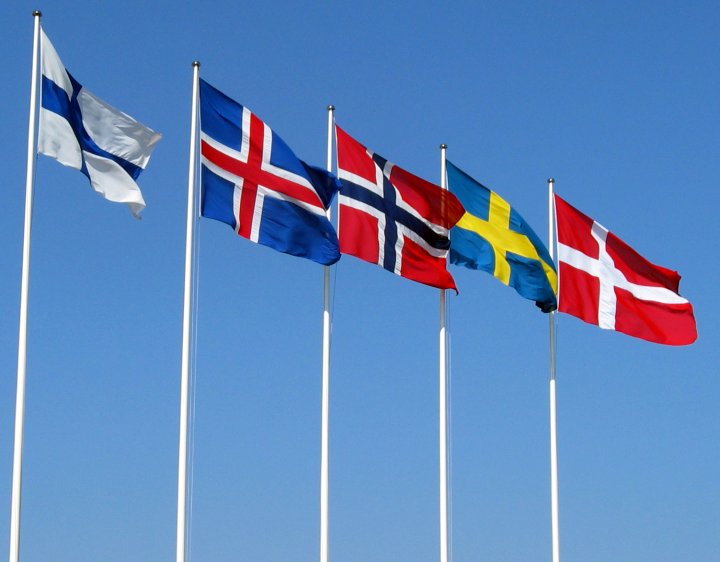
Welfare state models function through a complex interplay of state intervention, market mechanisms, and civil society. The Nordic approach, for instance, is characterized by universal provision of services like healthcare and education, financed through high levels of taxation, and a strong emphasis on collective bargaining between unions and employers, as seen in Sweden and Denmark. In contrast, the Anglo-Saxon model, prevalent in countries like the United States and the United Kingdom, tends to rely more on means-tested benefits, private insurance, and market-based service delivery, with a more limited state role. The Continental or Bismarckian model, found in countries like Germany and France, typically features social insurance contributions tied to employment, with benefits often linked to previous earnings.
📊 Key Facts & Numbers
Globally, welfare spending as a percentage of GDP varies significantly. In 2022, Sweden reported welfare spending at approximately 26.5% of its GDP, a figure representative of high-spending Nordic nations. The United States, on the other hand, spent around 18.7% of its GDP on social protection in the same year, aligning with Anglo-Saxon tendencies towards lower overall welfare expenditure. Germany, a prime example of the Bismarckian approach, spent roughly 25.1% of its GDP on social protection. These figures highlight the substantial economic commitment required to sustain different welfare state architectures, with variations often exceeding 10 percentage points of GDP between different model types.
👥 Key People & Organizations
Key figures in shaping welfare state models include Otto von Bismarck, whose social insurance legislation laid the foundation for the Bismarckian approach. In the mid-20th century, William Beveridge's influential report, 'Social Insurance and Allied Services' (1942), was instrumental in shaping the post-war welfare state in the United Kingdom and beyond, advocating for comprehensive social security. Political economists like Gøsta Esping-Andersen have been pivotal in categorizing and analyzing these models, with his seminal work 'The Three Worlds of Welfare Capitalism' (1990) defining the distinctions between decommodification in Nordic, Continental, and Anglo-Saxon welfare states. International organizations like the OECD also play a crucial role in collecting comparative data and analyzing welfare policies worldwide.
🌍 Cultural Impact & Influence
Welfare state models profoundly shape societal values and individual experiences. The Nordic countries, with their emphasis on universalism and equality, often exhibit high levels of social trust and low income inequality, as evidenced by consistently high HDI rankings for nations like Norway and Iceland. The Anglo-Saxon systems, while potentially fostering greater individual initiative and market dynamism, can also lead to higher levels of income disparity and a more pronounced social stratification, a dynamic often discussed in relation to United States society. The cultural resonance of these models influences public perception of the state's role, citizen responsibilities, and the very definition of social solidarity, impacting everything from family structures to political discourse.
⚡ Current State & Latest Developments
The contemporary landscape of welfare state models is one of constant adaptation and debate. Many nations are grappling with the fiscal pressures of aging populations and the changing nature of work, driven by automation and the gig economy. This has led to reforms aimed at increasing the efficiency of service delivery, such as the digitalization of public services in Estonia, a country often seen as a hybrid model. There's also a growing discussion about the potential for a Universal Basic Income (UBI) as a response to future labor market disruptions, a concept being piloted in various forms in places like Finland and parts of Canada. The ongoing challenge is to maintain social cohesion and security without crippling economic competitiveness, a balancing act that defines current policy debates across all model types.
🤔 Controversies & Debates
The sustainability of generous welfare states is a perennial controversy. Critics of the Nordic approach often point to high tax burdens as a disincentive to work and investment, questioning its long-term fiscal viability. Conversely, proponents argue that high social spending fosters a more stable and equitable society, ultimately benefiting the economy. Debates surrounding the Anglo-Saxon systems often focus on the adequacy of social safety nets, with critics arguing that means-testing can create poverty traps and stigmatize recipients, while supporters emphasize the importance of individual responsibility and market efficiency. The role of immigration in welfare systems also sparks heated debate, with concerns raised about integration and the potential strain on public resources, alongside arguments for the economic and social benefits immigrants can bring.
🔮 Future Outlook & Predictions
The future of welfare state models is likely to be characterized by increased personalization and flexibility. As demographic shifts continue and the labor market evolves, we can expect a move away from rigid, one-size-fits-all programs towards more tailored support systems. Technologies like artificial intelligence and big data analytics may play a larger role in optimizing service delivery and identifying individuals most in need of assistance, as seen in early applications in Singapore. There's also a growing possibility of hybrid models emerging, blending elements of universalism with targeted interventions, and a continued exploration of innovative financing mechanisms beyond traditional taxation. The ultimate trajectory will depend on political will and societal consensus regarding the balance between individual liberty and collective responsibility.
💡 Practical Applications
Welfare state models have direct practical applications in shaping public policy and social services. For instance, the success of Nordic countries in achieving high levels of gender equality is often attributed, in part, to their comprehensive parental leave policies and subsidized childcare, which facilitate women's participation in the workforce. The Bismarckian emphasis on social insurance has practical implications for retirement planning and healthcare provision in countries like Germany, where contributions directly fund these services. In the United States, debates about Medicare for All reflect an ongoing discussion about potentially shifting towards a more universal healthcare system, drawing lessons from the experiences of countries with established universal healthcare models.
Key Facts
- Category
- philosophy
- Type
- topic