
Contents
Overview
The Western Front's origins lie in the initial German strategy of the First World War, the Schlieffen Plan. This plan aimed for a swift defeat of France by invading through neutral Belgium and encircling the French army before Russia could fully mobilize. Following the First Battle of the Marne in September 1914, where the German advance was halted just miles from Paris, the war of maneuver ceased. Both sides engaged in the 'Race to the Sea,' a series of flanking attempts that ultimately failed, leading to the establishment of a continuous line of trenches stretching approximately 440 miles (700 km) from the North Sea coast to the Swiss border. This static line, solidified by late 1914, would remain the dominant feature of the war in the West for the next four years, becoming a symbol of attrition warfare.
⚙️ How It Works
The 'working' of the Western Front was a grim testament to industrial-age warfare. Vast networks of trenches, dug deep into the earth, provided rudimentary protection against artillery and small arms fire. These were not single lines but complex systems, often featuring multiple defensive belts, dugouts, and communication trenches. Between the opposing lines lay 'No Man's Land,' a desolate expanse of mud, barbed wire, and shell craters, swept by machine-gun fire. Offensives involved massive artillery bombardments designed to shatter enemy defenses, followed by waves of infantry 'going over the top' into this deadly terrain. The introduction of new technologies like poison gas, tanks, and aircraft attempted to break the stalemate, but often with limited success and horrific consequences for the soldiers.
📊 Key Facts & Numbers
The scale of death and destruction on the Western Front is staggering. Millions of soldiers were wounded. The Battle of the Somme (July-November 1916) alone resulted in over one million casualties, including nearly 60,000 British casualties on the first day. The Battle of Verdun (February-December 1916) saw an estimated 700,000 casualties. By the war's end, the front lines had shifted by an average of only about 100 miles (160 km) from their 1914 positions, despite the immense expenditure of human life and material resources. The cost per mile gained was astronomical, with some offensives costing tens of thousands of lives for mere yards of territory.
👥 Key People & Organizations
Key figures who shaped the Western Front include military leaders like Marshal Ferdinand Foch, the Supreme Allied Commander, who orchestrated the final offensives, and Erich Ludendorff, a key German general who implemented the 'stormtrooper' tactics. Field Marshal Douglas Haig, commander of the British Expeditionary Force, is often associated with the costly battles of attrition. On the political front, leaders like Georges Clemenceau of France and David Lloyd George of Britain navigated the immense pressures of the war. The soldiers themselves, like Erich Maria Remarque, author of the seminal anti-war novel All Quiet on the Western Front, provided the human perspective on this brutal theater.
🌍 Cultural Impact & Influence
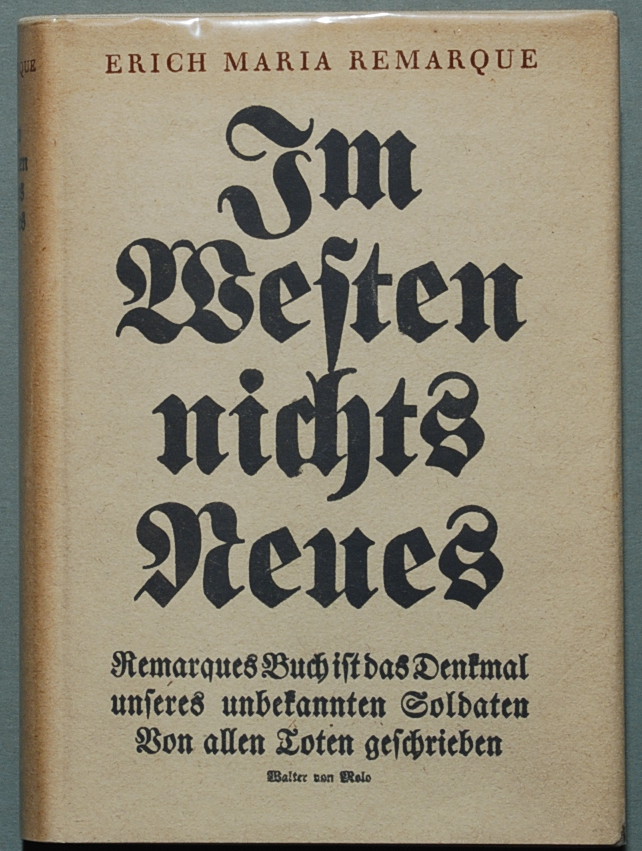
The Western Front has profoundly influenced global culture, particularly through literature and film. Erich Maria Remarque's novel All Quiet on the Western Front (1929) became an international bestseller, offering a visceral depiction of trench warfare and its psychological toll, and was subsequently adapted into acclaimed films in 1930 and 2022. Other works like Robert Graves's Goodbye to All That and Wilfred Owen's poetry captured the disillusionment and horror experienced by soldiers. The very term 'Western Front' has become shorthand for a prolonged, bloody, and seemingly futile conflict, influencing perceptions of warfare and its human cost in subsequent conflicts, including the Second World War and even modern engagements.
⚡ Current State & Latest Developments
The physical remnants of the Western Front continue to exist today, primarily as memorials and preserved trench systems. Sites like the Somme battlefield, Verdun, and Ypres (now Ieper, Belgium) attract millions of visitors annually, serving as poignant reminders of the war's devastation. Organizations such as the Commonwealth War Graves Commission maintain cemeteries and memorials across the region. While the immediate military significance has long passed, the historical and memorial aspects of the Western Front remain active, with ongoing archaeological research and preservation efforts by various historical societies and national heritage bodies.
🤔 Controversies & Debates
The primary controversy surrounding the Western Front centers on the strategic decisions and leadership that led to such catastrophic casualties for minimal gains. Critics often point to commanders like Douglas Haig and his perceived willingness to sacrifice vast numbers of men in costly offensives, such as the Battle of the Somme. Debates persist regarding the effectiveness of trench warfare tactics, the ethical implications of using new technologies like poison gas, and the long-term psychological impact on veterans, often termed 'shell shock' or PTSD. The narrative of the 'lost generation' and the perceived futility of the conflict remain subjects of intense historical scrutiny and public debate.
🔮 Future Outlook & Predictions
The future of the Western Front as a historical site involves continued preservation and interpretation. Efforts are underway to protect remaining trench systems and battlefield landscapes from development and erosion, recognizing their immense historical value. Educational initiatives and digital archiving projects aim to make the experiences of soldiers more accessible to future generations. While no new military conflict is anticipated on these specific lines, the lessons learned from the Western Front—about the nature of industrial warfare, the importance of strategic planning, and the profound human cost of conflict—will continue to inform military doctrine and international relations for decades to come.
💡 Practical Applications
The most significant 'application' of the Western Front is as a historical case study and a memorial. It serves as a stark warning against the dangers of prolonged, attritional warfare and the underestimation of human cost in military strategy. For historians, it is a crucial period for understanding the evolution of military technology, tactics, and the societal impact of total war. For the public, it functions as a place of remembrance and reflection, with numerous museums, memorials, and preserved battlefields offering tangible connections to the past. The literary and cinematic portrayals continue to educate and shape public understanding of World War I's horrors.
Key Facts
- Category
- history
- Type
- place