
Contents
Overview
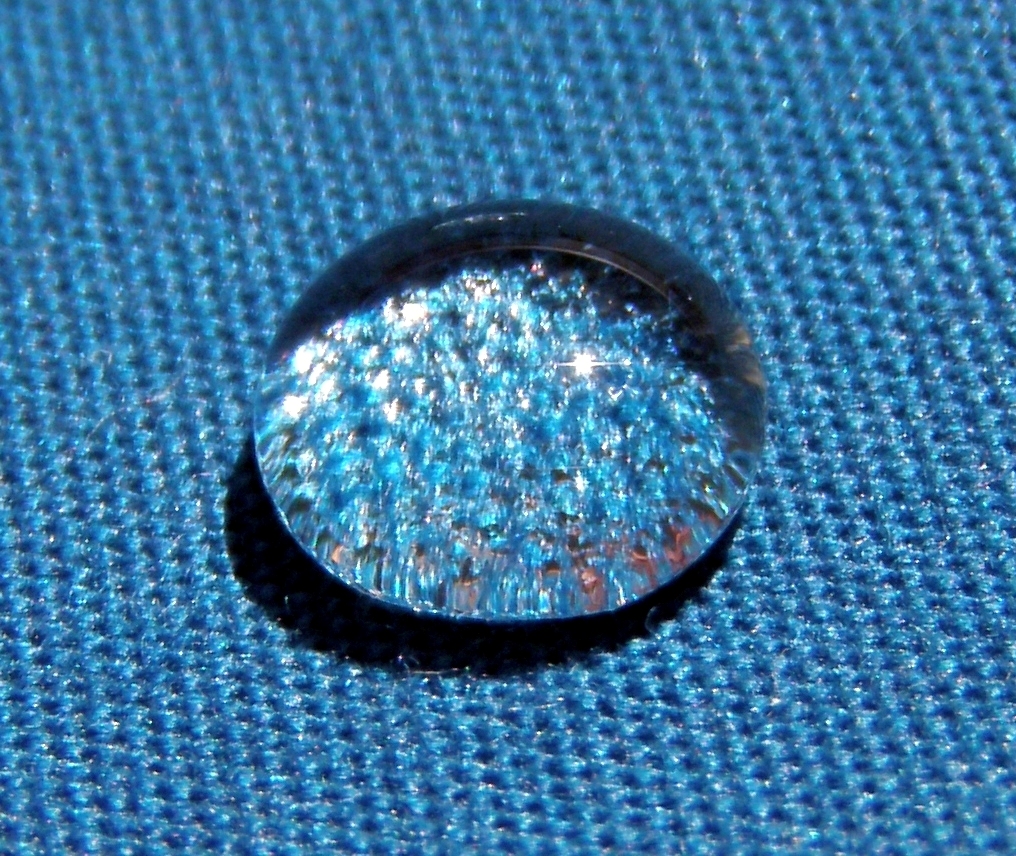
Wetting phenomena describe the ability of a liquid to spread across or adhere to a solid surface, a process governed by the delicate balance of intermolecular forces. It's the reason why water beads on a waxed car but spreads on clean glass, and it underpins critical industrial processes like printing, coating, and soldering, as well as biological functions such as nutrient absorption and cell signaling. The degree of wetting, quantified by contact angles, is a direct consequence of the interplay between adhesive forces (liquid-solid attraction) and cohesive forces (liquid-liquid attraction). Understanding these forces, often manipulated by surfactants, is paramount in fields ranging from materials science and chemical engineering to medicine and environmental science. The advent of nanotechnology has further amplified the importance of wetting, with nanoscale surfaces exhibiting unique behaviors that challenge classical theories and open new avenues for innovation.
🎵 Origins & History
Early observations on fluid behavior date back to the 17th century. Thomas Young's 1805 work on surface tension was foundational. Pierre Curie and Jacques Curie also made significant contributions to surface physics. The development of surfactants in the mid-20th century, notably by companies like Dow Chemical and Procter & Gamble, provided practical means to control wetting, further driving research and industrial application.
⚙️ How It Works
Wetting is fundamentally governed by the competition between adhesive forces (attraction between the liquid and the solid surface) and cohesive forces (attraction between liquid molecules themselves). When a liquid droplet is placed on a solid surface, it will either spread out or bead up depending on which forces dominate. This is quantified by the contact angle, the angle formed at the point where the liquid-vapor interface and the solid-liquid interface meet. The Young equation relates the contact angle to the surface tensions of the liquid-vapor, solid-liquid, and solid-vapor interfaces, providing a quantitative model for predicting wetting behavior. Capillary action, the ability of a liquid to flow in narrow spaces without the assistance of, or even in opposition to, external forces like gravity, is a direct manifestation of wetting phenomena.
📊 Key Facts & Numbers
The global market for surfactants, key agents in controlling wetting, was valued at approximately $170 billion USD in 2023 and is projected to grow to over $220 billion USD by 2030, underscoring the economic significance of wetting phenomena. Water, with a surface tension of approximately 72 millinewtons per meter (mN/m) at room temperature, exhibits significant wetting on clean, hydrophilic surfaces but beads on hydrophobic ones. In contrast, liquids like mercury have very high surface tension (around 487 mN/m), leading to strong cohesive forces and poor wetting on most surfaces. The critical surface tension of wetting for a solid surface is the lowest surface tension a liquid can have and still spread completely on that surface; for PTFE (Teflon), this is approximately 18 mN/m. Studies have shown that even a single layer of molecules can drastically alter wetting properties, with nanometer-scale surface roughness potentially changing a contact angle by up to 40 degrees.
👥 Key People & Organizations
Key figures in the study of wetting include Thomas Young, whose 1805 work on surface tension was foundational. Pierre Curie and Jacques Curie also made significant contributions to surface physics. In modern times, researchers like Jean-Michel Corpart have been instrumental in developing and applying surfactants for industrial purposes. Organizations such as the American Chemical Society and the Royal Society of Chemistry host numerous conferences and publish journals dedicated to surface science and colloid chemistry, where wetting phenomena are frequently discussed. Companies like 3M, Henkel, and BASF are major industrial players, developing and utilizing wetting agents in a vast array of products, from adhesives and coatings to detergents and personal care items.
🌍 Cultural Impact & Influence
Wetting phenomena are woven into the fabric of everyday life and industrial processes. The ability of water to wet soil is crucial for agriculture and ecosystems, influencing plant growth and water distribution. In manufacturing, wetting is essential for processes like printing, where ink must wet the substrate to transfer an image, and soldering, where molten metal must wet the surfaces to create a strong electrical connection. The effectiveness of detergents and cleaning products relies heavily on their ability to reduce water's surface tension and wet contaminated surfaces. Even biological systems depend on wetting; the lungs' alveoli are coated with a fluid that must have specific wetting properties to prevent collapse, and the absorption of nutrients in the gut involves liquids wetting the intestinal lining.
⚡ Current State & Latest Developments
Current research in wetting phenomena is heavily influenced by advancements in nanotechnology and materials science. Scientists are exploring superhydrophobic surfaces, inspired by the lotus leaf, which exhibit extreme water repellency due to hierarchical surface structures that trap air. The development of graphene and other 2D materials has opened new avenues for creating surfaces with tunable wetting properties. Furthermore, the study of wetting on complex, biologically relevant surfaces is gaining traction, with applications in biomedical engineering for designing better implants and drug delivery systems. The use of computational fluid dynamics (CFD) is also becoming more sophisticated, allowing for detailed simulations of wetting dynamics at the micro- and nanoscale, as seen in recent publications from institutions like MIT.
🤔 Controversies & Debates
One persistent debate in wetting science revolves around the precise prediction of wetting behavior on surfaces with complex topographies and chemical heterogeneities, especially at the nanoscale. While the Young equation provides a fundamental basis, its applicability can be limited in real-world scenarios where surface roughness and contamination are significant factors. Another area of contention is the development of truly omniphobic (repelling all liquids) surfaces, which remain a significant challenge due to the inherent tendency of liquids to interact with matter. The environmental impact of certain surfactants, particularly their biodegradability and potential aquatic toxicity, also sparks ongoing debate and drives research into greener alternatives. The interpretation of contact angle hysteresis, the difference between advancing and receding contact angles, also presents ongoing challenges in precise measurement and theoretical explanation.
🔮 Future Outlook & Predictions
The future of wetting phenomena research points towards highly engineered surfaces with precisely controlled wettability for advanced applications. Expect to see widespread adoption of self-cleaning surfaces in architecture and transportation, inspired by the lotus effect. In medicine, the development of anti-fouling coatings for medical devices, preventing bacterial adhesion and biofilm formation, will rely on sophisticated wetting control. The energy sector may see innovations in enhanced oil recovery techniques that utilize tailored wetting agents to mobilize trapped hydrocarbons. Furthermore, the integration of wetting phenomena into 3D printing processes could enable the fabrication of complex microfluidic devices and functional materials with unprecedented precision. The exploration of quantum dots and their interaction with liquid environments also hints at novel optical and electronic applications.
💡 Practical Applications
Wetting phenomena are critical in a vast array of practical applications. In the textile industry, wetting agents are used to ensure dyes penetrate fabrics evenly, leading to uniform coloration. The [[paint-a
Key Facts
- Category
- science
- Type
- topic