
Contents
- 🎵 Origins & History
- ⚙️ Academic Prowess & Partnership
- 📊 Key Facts & Numbers
- 👥 Key People & Organizations
- 🌍 Cultural Impact & Influence
- ⚡ Personal Life & Later Years
- 🤔 Controversies & Debates
- 🔮 Future Outlook & Predictions
- 💡 Practical Applications
- 📚 Related Topics & Deeper Reading
- Frequently Asked Questions
- References
- Related Topics
Overview
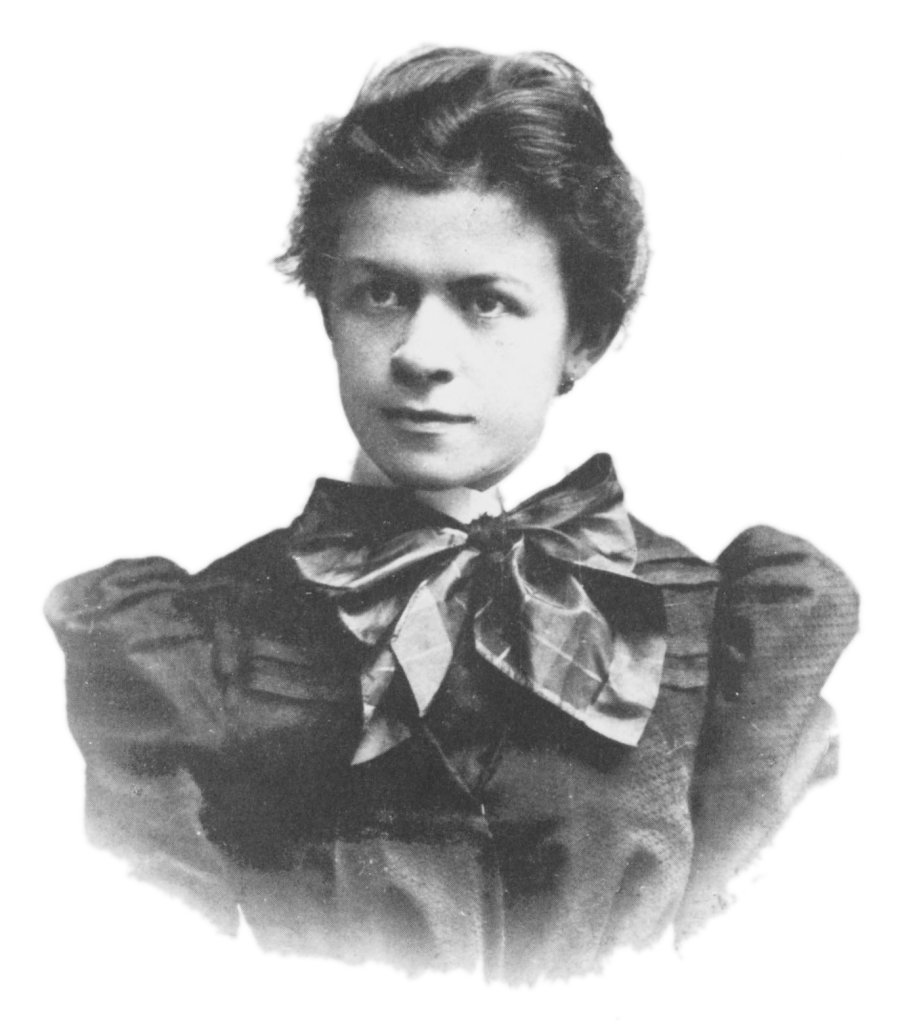
Mileva Marić was born on December 19, 1875, in Titel, Kingdom of Hungary (now Serbia), to Miloš and Marija Ružić Marić. Her family, though not wealthy, recognized her exceptional intellect. She attended the Gymnasium in Novi Sad and later the Serbian Orthodox Girls' School in Sombor, where she excelled in mathematics and physics. In 1890, she became one of the first women to attend the Royal Serbian Gymnasium. Her academic journey took her to Heidelberg University in Germany in 1896, where she audited physics and mathematics lectures, and then to Zürich Polytechnic (now ETH Zurich) in 1896, enrolling as the only woman in the physics and mathematics section of the diploma course. Her early academic environment was dominated by men, a testament to her drive and exceptional aptitude in fields largely inaccessible to women at the time.
⚙️ Academic Prowess & Partnership
At Zürich Polytechnic, Marić met Albert Einstein in 1896. They quickly bonded over their shared passion for physics and mathematics, becoming study partners and, soon after, lovers. Marić's academic performance was strong; she passed the final examinations in 1899, though she did not graduate with a diploma. She re-sat the exams in 1900, achieving a grade of 4.5 out of 6 in physics and 4.0 in mathematics, placing her among the top students. Her intellectual engagement with Einstein during this period is well-documented through their extensive correspondence. The question of whether her contributions extended beyond mere discussion to actual co-authorship or significant intellectual input into Einstein's early theories, particularly the 1905 annus mirabilis papers, remains a central point of discussion among historians of science.
📊 Key Facts & Numbers
Marić was born in 1875 and died in 1948, living a span of 72 years. She was one of only four women in her graduating class at Zürich Polytechnic, which had an enrollment of over 1,000 students in the physics and mathematics program. Her academic grades in 1899 placed her in the top tier of students, with a physics score of 4.5 out of 6. She had three children: Lieserl (born 1902, likely died in infancy), Hans Albert (born 1904), and Eduard (born 1910). The Einstein couple divorced in 1919, with Albert Einstein paying Mileva a portion of his Nobel Prize money as part of the settlement. By 1930, her son Eduard was diagnosed with schizophrenia, requiring significant financial and emotional support from Marić, which continued until her death.
👥 Key People & Organizations
Mileva Marić's life was inextricably linked to Albert Einstein, her husband from 1903 to 1919. Her father, Miloš Marić, was a landowner and later a court councilor. Her mother was Marija Ružić. Her children, Hans Albert Einstein and Eduard Einstein, were central figures in her later life, with Hans Albert becoming a professor of hydraulic engineering at the University of California, Berkeley. She was educated at the University of Zurich and ETH Zurich. Her intellectual circle included fellow students at Zürich Polytechnic, some of whom, like Marcel Grossmann, remained friends with the Einsteins. The scientific community, particularly historians of science, remains divided on the extent of her contributions to Einstein's early work.
🌍 Cultural Impact & Influence
The cultural resonance of Mileva Marić's story lies in its exploration of the often-invisible contributions of women in science and the complexities of intellectual partnerships. While her name is often secondary to her famous husband, her life has inspired numerous books, plays, and academic inquiries. The debate over her role in Einstein's discoveries has elevated her from a footnote to a significant figure in discussions about gender bias in academia and the historical erasure of women's scientific achievements. Her life serves as a poignant example of the societal constraints faced by women in the early 20th century, particularly those pursuing demanding scientific careers. The enduring fascination with her potential contributions fuels ongoing research and public interest in the intersection of personal relationships and scientific breakthroughs.
⚡ Personal Life & Later Years
After her divorce from Albert Einstein in 1919, Mileva Marić remained in Zurich with her sons, Hans Albert and Eduard. She dedicated herself to caring for Eduard, who suffered from severe mental health issues and required constant supervision and medical care. This responsibility placed a significant financial and emotional burden on her. She lived a relatively private life, largely out of the public eye, focusing on her family. She passed away on August 4, 1948, in Zurich, Switzerland. Her later years were marked by financial struggles and the profound challenges of raising a child with a chronic illness, a stark contrast to the intellectual ferment of her earlier life with Einstein.
🤔 Controversies & Debates
The most significant controversy surrounding Mileva Marić is the extent of her contribution to Albert Einstein's early scientific papers, particularly those published in 1905. Some scholars, citing passages in their correspondence and testimonies from contemporaries, argue that she was a crucial intellectual partner, possibly co-authoring or significantly influencing papers on the photoelectric effect and special relativity. Others, including many mainstream biographers of Einstein, contend that while she was an intelligent and supportive partner, her direct scientific input was minimal, and the claims of co-authorship are speculative or exaggerated. This debate is fueled by the destruction of many of their personal letters and the fact that Einstein himself never explicitly credited her as a co-author, though he did refer to 'our work' in some early letters. The controversy highlights the difficulty in assessing collaborative intellectual efforts, especially when gender dynamics and historical record-keeping are involved.
🔮 Future Outlook & Predictions
The ongoing scholarly debate about Mileva Marić's contributions is likely to continue, potentially leading to a re-evaluation of her role in the history of physics. Future research may uncover new documentary evidence that could shed more light on her intellectual involvement with Einstein's work. As historical methodologies evolve to better account for the contributions of marginalized figures, particularly women in science, Marić's story may be further contextualized within broader narratives of scientific collaboration and societal barriers. The increasing digitization of historical archives and the application of computational analysis to historical texts could also play a role in uncovering subtle patterns of influence or collaboration that were previously overlooked. The potential for a more nuanced understanding of her intellectual legacy remains high.
💡 Practical Applications
While Mileva Marić did not develop any specific technologies or theories that bear her name in the way Albert Einstein's did, her life and academic pursuits have practical implications for understanding the historical context of women in STEM. Her story serves as a case study for educators and institutions aiming to promote gender equality in science, technology, engineering, and mathematics (STEM) fields. By examining her educational journey and the challenges she faced, we gain insights into the systemic barriers that have historically limited women's scientific careers. Furthermore, the ongoing debate about her potential contributions encourages critical thinking about authorship, collaboration, and the recognition of intellectual work, particularly in collaborative environments. Her life underscores the importance of actively seeking out and acknowledging the contributions of all individuals, regardless of gender or historical prominence.
Key Facts
- Year
- 1875-1948
- Origin
- Titel, Serbia
- Category
- person
- Type
- person
Frequently Asked Questions
What was Mileva Marić's primary field of study?
Mileva Marić's primary fields of study were physics and mathematics. She pursued these subjects rigorously at Heidelberg University and later at Zürich Polytechnic, where she was one of the few women in her program. Her academic performance placed her among the top students, demonstrating a strong aptitude for theoretical science. Despite not graduating with a diploma, her engagement with these disciplines was profound, and she shared this intellectual passion with her future husband, Albert Einstein, leading to extensive discussions and collaborations on scientific concepts.
What is the main controversy surrounding Mileva Marić?
The central controversy surrounding Mileva Marić is the extent of her intellectual contribution to Albert Einstein's groundbreaking scientific papers, particularly the annus mirabilis papers of 1905. While some historians and biographers argue that she was a significant collaborator, possibly even a co-author, others maintain that her role was primarily that of a supportive partner. This debate is fueled by limited documentary evidence, including the destruction of many personal letters, and the differing interpretations of Einstein's own references to 'our work' in his correspondence with Marić. The controversy highlights the historical challenges women faced in receiving recognition for their scientific contributions.
How did Mileva Marić's personal life impact her scientific career?
Mileva Marić's personal life significantly impacted her scientific career, often in ways that curtailed her professional ambitions. Her relationship with Albert Einstein began as an intellectual partnership but evolved into marriage, producing three children. The birth of their daughter, Lieserl, and later their sons, Hans Albert and Eduard, demanded considerable attention. The most profound impact came from caring for her son Eduard, who suffered from severe mental illness, requiring Marić's constant dedication and financial resources. This responsibility, coupled with her divorce from Einstein in 1919, meant she largely withdrew from active scientific pursuits, focusing instead on family care and living a more private existence.
What was Mileva Marić's educational background?
Mileva Marić received a robust education in mathematics and physics, which was exceptional for women of her era. She attended the Gymnasium in Novi Sad and later the Royal Serbian Gymnasium. In 1896, she began auditing lectures at Heidelberg University before enrolling at Zürich Polytechnic (now ETH Zurich) in the same year. She was one of the few women admitted to the physics and mathematics section of the diploma course. While she did not ultimately earn a formal diploma, her academic records show she passed her final examinations with strong grades, indicating a high level of scientific understanding and capability.
Why is Mileva Marić's legacy debated?
Mileva Mari's legacy is debated primarily because of the complex and often ambiguous nature of her relationship with Albert Einstein and the limited direct evidence of her scientific contributions. While their early correspondence suggests a deep intellectual partnership, the destruction of many letters and Einstein's lack of explicit co-authorship credits leave room for interpretation. Historians grapple with assessing the extent to which Marić's insights or work influenced Einstein's revolutionary theories. Furthermore, the historical context of gender bias in science means that her potential contributions may have been overlooked or downplayed by contemporaries and subsequent chroniclers, making it challenging to definitively ascertain her precise role.
What happened to Mileva Marić after her divorce from Albert Einstein?
Following her divorce from Albert Einstein in 1919, Mileva Marić remained in Zurich, Switzerland, with their two sons, Hans Albert and Eduard. Her life became largely dedicated to the care of her sons, particularly Eduard, who suffered from schizophrenia and required continuous medical attention and support. This period was marked by significant financial strain and personal sacrifice. She lived a relatively private life, away from the scientific spotlight, and passed away in 1948. Her later years were defined by her maternal responsibilities and the challenges of managing her family's well-being.
What is the significance of Mileva Marić's story today?
Mileva Marić's story holds significant importance today as a symbol of the often-unacknowledged contributions of women in science and the historical barriers they faced. Her life serves as a powerful reminder of the systemic challenges that prevented many talented female scientists from achieving recognition in fields dominated by men. The ongoing debate about her role in Einstein's work encourages critical examination of scientific history, authorship, and collaboration. Her narrative inspires discussions about gender equality in STEM and the need to actively uncover and celebrate the achievements of marginalized figures, ensuring a more complete and equitable understanding of scientific progress.