
Summary
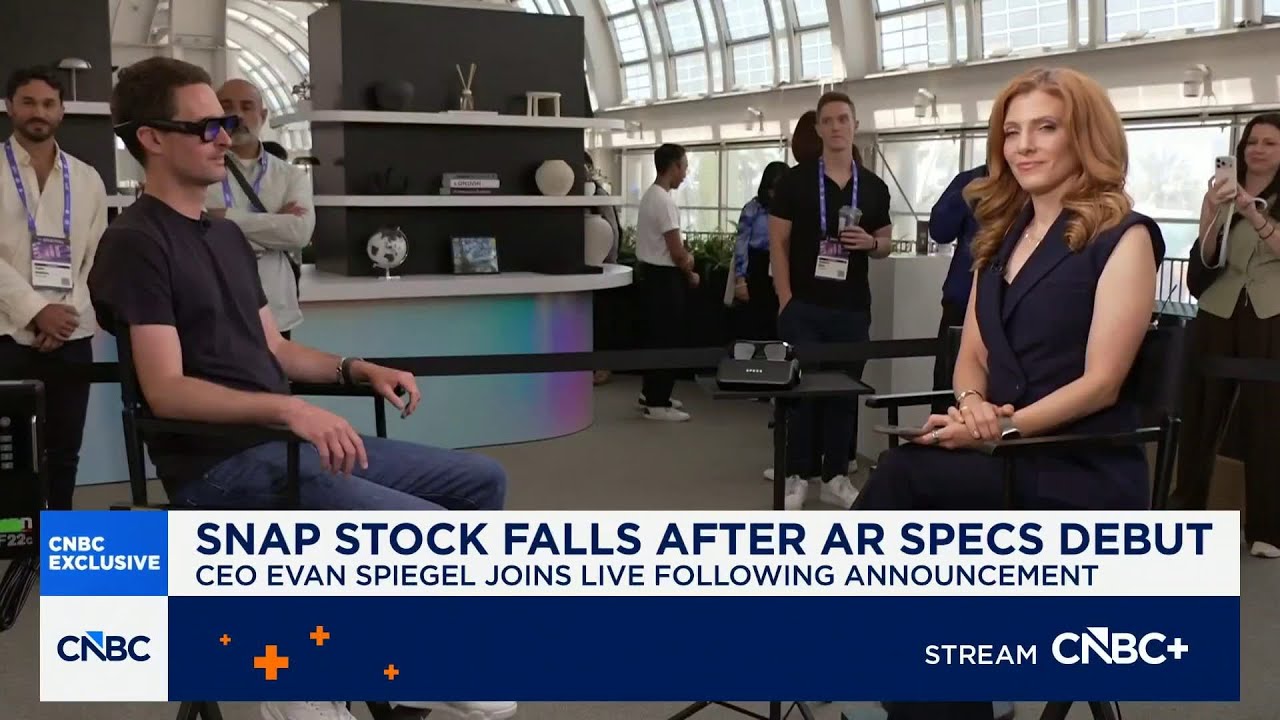
Snap's highly anticipated AR glasses, dubbed 'Specs,' have debuted to a lukewarm reception, sending the company's stock into a significant dive. The glasses are priced at a staggering **$2,200**, a figure far beyond the reach of Snap's primary user base of teenagers. This pricing strategy has ignited widespread skepticism about the product's commercial viability and Snap's path to profitability. Following the announcement, Snap's stock plummeted over **5%**, erasing gains and raising concerns about the company's financial health, which has already seen a **30% drop** in the past year. CEO **Evan Spiegel** defended the cost by comparing Specs to high-end computers, positioning it as a capable yet wearable AR device distinct from bulkier alternatives like the [[apple-vision-pro|Apple Vision Pro]].
Key Takeaways
- Snap's new AR glasses, Specs, launched at $2,200, are significantly more expensive than its core user demographic can afford.
- The high price led to a more than 5% drop in Snap's stock, adding to a 30% decline over the past year.
- CEO Evan Spiegel defended the price by comparing Specs to high-end computers and positioning it uniquely between Meta's and Apple's AR offerings.
- Investor confidence is shaken, raising questions about the commercial viability and profitability path for Snap's new hardware.
- The launch underscores the challenge of balancing cutting-edge innovation with mass-market affordability in the consumer tech space.
Balanced Perspective
The launch of Snap's Specs at **$2,200** presents a clear disconnect with its core demographic of teenagers, who are unlikely to afford such a device. While CEO **Evan Spiegel** frames it as a 'computer' comparable to laptops, the market's reaction, evidenced by the **5% stock drop**, suggests investor concern over the product's immediate commercial viability. The glasses aim to occupy a middle ground between [[meta-ray-ban-smart-glasses|Meta's Ray-Bans]] and the [[apple-vision-pro|Apple Vision Pro]], but their high cost and unproven market demand create significant uncertainty regarding [[snapchat|Snapchat]]'s ability to generate substantial revenue from this venture, especially given the company's existing **30% stock decline** over the past year.
Optimistic View
Snap's Specs represent a bold leap into the future of [[augmented-reality|AR]], positioning the company as a leader in wearable computing. The **$2,200 price tag** reflects the cutting-edge technology and immersive capabilities, akin to high-end laptops, targeting early adopters and enterprise users who will appreciate its unique blend of wearability and power. This strategic pricing could establish a premium market segment, paving the way for future, more accessible iterations and solidifying Snap's long-term vision for spatial computing, potentially outmaneuvering competitors like [[meta|Meta]] with a more refined offering.
Critical View
Snap's decision to launch AR glasses at an exorbitant **$2,200** price point is a strategic miscalculation that alienates its core user base and signals a potential financial crisis for the company. This move, following a **30% stock decline** in the past year, suggests a desperate attempt to chase high-margin hardware without a clear understanding of market realities. The comparison to laptops by CEO **Evan Spiegel** rings hollow when considering the target audience, and the product risks becoming a niche, expensive gadget with little adoption, further jeopardizing [[snapchat|Snapchat]]'s already precarious financial standing and its ability to compete in the evolving [[social-media|social media]] landscape.
Source
Originally reported by TechCrunch