
International Olympic Committee (IOC) | Vibepedia
The International Olympic Committee (IOC) is the supreme authority of the Olympic Movement, a non-governmental, international organization headquartered in…
Contents
- 🏛️ What is the IOC?
- 📍 Headquarters & Global Reach
- 🗓️ History & Evolution
- 🏆 Governing Scope
- 💰 Revenue Streams & Funding
- ⚖️ Governance & Decision-Making
- 🌟 Key Figures & Leadership
- 🌐 Relationship with National Bodies
- 🚀 Future Outlook & Challenges
- 🤔 Controversy Spectrum
- 💡 Vibepedia Vibe Score
- Frequently Asked Questions
- Related Topics
Overview
The International Olympic Committee (IOC) is the ultimate arbiter of the [[Olympic Games|Olympic Games]], acting as the global, non-governmental sports governing body. Think of it as the central nervous system for the entire Olympic ecosystem, from the athletes competing to the National Olympic Committees (NOCs) that select them. Its primary mandate is to promote Olympism worldwide, ensuring the Games are held every four years in a spirit of peace and international understanding. The IOC doesn't directly organize the Games themselves; that falls to local organizing committees, but it sets the rules, selects host cities, and manages the overall brand and vision. Understanding the IOC is key to grasping the complex interplay of sport, politics, and global commerce.
📍 Headquarters & Global Reach
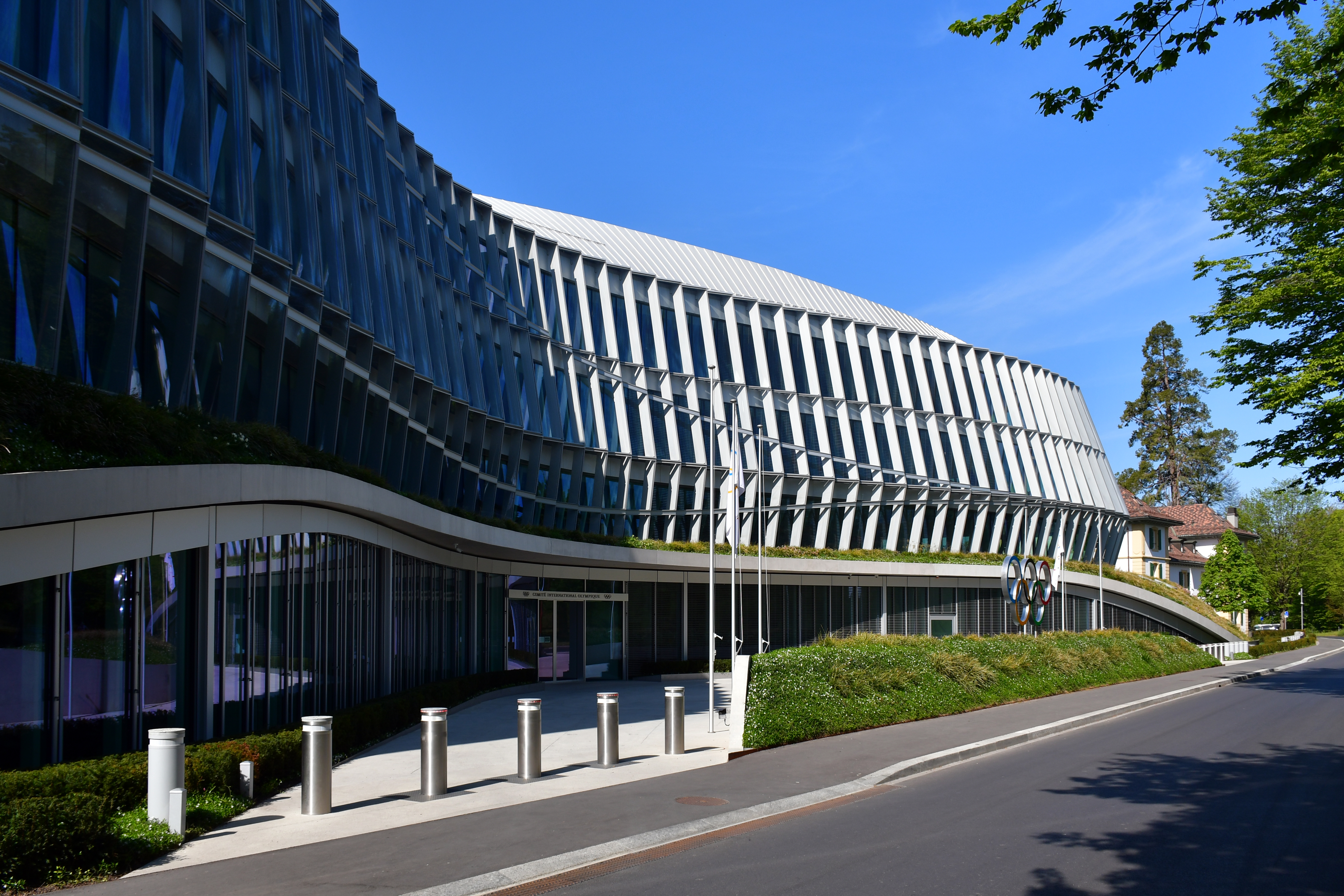
The IOC's nerve center is located in Lausanne, Switzerland, a city that has embraced its role as the Olympic capital. From this base, the Committee oversees a vast network of affiliated organizations. As of recent counts, the IOC officially recognizes 206 [[National Olympic Committees|National Olympic Committees (NOCs)]], each representing a country or territory. This global footprint means the IOC's decisions ripple across continents, influencing sports policy, athlete development, and even national prestige. While its physical headquarters are in Switzerland, its operational reach is truly worldwide, coordinating efforts for the [[Summer Olympics|Summer Games]] and [[Winter Olympics|Winter Games]] alike.
🗓️ History & Evolution
Founded in 1894 by [[Pierre de Coubertin|Pierre de Coubertin]] and Demetrios Vikelas, the IOC's origins are rooted in a desire to revive the ancient Olympic Games and foster international goodwill through sport. Over its century-plus history, the organization has navigated world wars, political boycotts, and seismic shifts in the media landscape. The introduction of the [[Winter Olympics|Winter Games]] in 1924 and the [[Youth Olympic Games|Youth Olympic Games]] in 2010 represent significant expansions of its remit. Each era has presented unique challenges, forcing the IOC to adapt its governance and operational strategies to remain relevant in a constantly changing world.
🏆 Governing Scope
The IOC's governing scope is extensive, encompassing the organization and staging of the Olympic Games – both Summer and Winter editions, as well as the Youth Olympic Games. Beyond the quadrennial events, it governs the broader [[Olympic Movement]], which includes all recognized NOCs, International Sports Federations (IFs), and athletes. This means the IOC sets the Olympic Charter, the fundamental document outlining the rules and principles of the Olympic Movement, and has the final say on which sports are included in the Games. Its authority extends to anti-doping efforts through its stake in the [[World Anti-Doping Agency|World Anti-Doping Agency (WADA)]].
💰 Revenue Streams & Funding
The IOC's financial engine is a complex mix of broadcasting rights, [[Olympic sponsorship|Olympic sponsorship]] programs, and licensing. A significant portion of its revenue, often hundreds of millions of dollars per Olympic cycle, comes from selling media rights to broadcast the Games. The TOP (The Olympic Partner) program, a select group of global sponsors, also contributes substantially. These funds are then distributed to NOCs, IFs, and the organizing committees of future Games, underscoring the IOC's role as a major financial player in the global sports industry. This financial model is crucial for maintaining the Olympic Games as a premier global event.
⚖️ Governance & Decision-Making
The IOC operates under a unique governance structure, with its [[Olympic Charter|Olympic Charter]] serving as its constitution. Decision-making power resides with its members, who are elected for eight-year terms and are expected to act in their capacity as IOC representatives, not as delegates of their home countries. The [[IOC Session|IOC Session]], comprising all members, is the supreme organ, meeting annually. Day-to-day operations are managed by the [[IOC Executive Board|IOC Executive Board]], chaired by the [[IOC President|IOC President]]. This structure aims to balance the interests of various stakeholders while maintaining the Olympic ideals.
🌟 Key Figures & Leadership
The leadership of the IOC is personified by its [[IOC President|IOC President]]. As of 2025, [[Kirsty Coventry|Kirsty Coventry]] holds this pivotal role, succeeding Thomas Bach. The President is the chief executive officer and spokesperson for the IOC, responsible for guiding its strategic direction and representing the Olympic Movement on the global stage. The President works closely with the [[IOC Executive Board|IOC Executive Board]] and the [[IOC Session|IOC Session]] to implement policies and oversee the organization's vast operations. The President's tenure is critical in shaping the IOC's response to contemporary challenges.
🌐 Relationship with National Bodies
The IOC's relationship with its 206 recognized [[National Olympic Committees|National Olympic Committees (NOCs)]] is foundational. NOCs are the IOC's national delegates, responsible for developing and protecting the Olympic Movement within their respective countries. They select their Olympic teams, manage national training programs, and promote Olympic values. The IOC provides financial and technical support to NOCs, particularly those from developing nations, through programs like the [[Olympic Solidarity|Olympic Solidarity]] fund. This symbiotic relationship ensures the Olympic Games can be represented by athletes from virtually every nation on Earth.
🚀 Future Outlook & Challenges
The future of the Olympic Games under IOC stewardship is a subject of intense speculation. Challenges include the escalating costs of hosting, the increasing complexity of global politics, and the need to adapt to evolving media consumption habits. The IOC is exploring new revenue models, considering reforms to the bidding process for host cities, and grappling with issues like athlete eligibility and the inclusion of new sports. The organization's ability to maintain its relevance and uphold its ideals in the face of these pressures will define its legacy. The [[Olympic Agenda 2020+5|Olympic Agenda 2020+5]] outlines many of these forward-looking initiatives.
🤔 Controversy Spectrum
The IOC operates within a significant [[Controversy Spectrum|Controversy Spectrum]]. Debates frequently arise concerning the awarding of Games to countries with questionable human rights records (e.g., [[Beijing 2022 Winter Olympics|Beijing 2022]] and [[Sochi 2014 Winter Olympics|Sochi 2014]]), the immense financial burden placed on host cities, and the ongoing struggle with doping scandals. Allegations of corruption in bidding processes have also surfaced periodically. While the IOC champions ideals of peace and unity, its practical operations often intersect with complex geopolitical and economic realities, leading to persistent scrutiny and criticism from various advocacy groups and media outlets.
💡 Vibepedia Vibe Score
Vibepedia Vibe Score: 78/100. The IOC commands a high Vibe Score due to its unparalleled global reach and cultural significance as the steward of the [[Olympic Games|Olympic Games]]. Its ability to unite nations, albeit temporarily, through sport generates immense positive energy. However, the score is tempered by persistent controversies surrounding governance, costs, and geopolitical entanglements, which introduce significant friction into its overall cultural resonance. The organization's historical weight and aspirational ideals are undeniable, but its practical execution often falls short of its lofty pronouncements, creating a complex and sometimes contradictory Vibe.
Key Facts
- Year
- 1894
- Origin
- Lausanne, Switzerland
- Category
- Sports Governance
- Type
- Organization
Frequently Asked Questions
Who is the current IOC President?
As of 2025, the President of the International Olympic Committee (IOC) is [[Kirsty Coventry|Kirsty Coventry]]. She succeeded Thomas Bach. The President serves as the chief executive and spokesperson for the IOC, guiding its strategic direction and representing the Olympic Movement globally. Their tenure is crucial for navigating the organization's challenges and opportunities.
How does the IOC make money?
The IOC generates revenue primarily through the sale of broadcasting rights for the Olympic Games and its [[Olympic sponsorship|Olympic sponsorship]] programs, particularly the TOP (The Olympic Partner) program. Licensing agreements also contribute. This revenue is then reinvested into the Olympic Movement, supporting NOCs, IFs, and future Games.
What is the difference between the IOC and an NOC?
The IOC is the supreme governing body of the Olympic Movement worldwide, responsible for the overall organization and vision of the Olympic Games. [[National Olympic Committees|National Olympic Committees (NOCs)]] are national bodies responsible for selecting their country's athletes, managing national training programs, and promoting the Olympic Movement within their borders. NOCs are recognized by and affiliated with the IOC.
Can athletes compete for any country they want?
Generally, athletes must compete for the NOC of their country of nationality. However, the [[Olympic Charter|Olympic Charter]] allows for exceptions, such as athletes who have acquired a new nationality. In such cases, there are specific eligibility rules and waiting periods that must be met, often requiring approval from both the IOC and the relevant NOCs.
What is the Olympic Charter?
The [[Olympic Charter|Olympic Charter]] is the codified set of rules, by-laws, and guidelines established by the IOC. It serves as the constitution of the Olympic Movement, defining its principles, objectives, structure, and the rights and obligations of its various constituents, including athletes, NOCs, and IFs. It is the ultimate legal document governing all Olympic activities.
How are host cities for the Olympic Games selected?
The selection of host cities is a multi-stage process managed by the IOC. Prospective cities express interest, followed by a formal application phase. The IOC then conducts rigorous evaluations of the candidate cities based on various criteria, including infrastructure, security, and financial viability. Finally, the [[IOC Session|IOC Session]] votes to select the host city. Recent reforms aim to make this process more transparent and sustainable.