
Contents
Overview
The genesis of the Curiosity rover lies in NASA's ambitious Mars Science Laboratory (MSL) mission, conceived in the early 2000s to investigate Mars' potential for habitability. Building upon the successes of earlier rover missions like Sojourner and Spirit and Opportunity, MSL aimed for a more sophisticated, mobile laboratory. The rover's design and construction were managed by JPL, with key contributions from numerous academic institutions and private aerospace contractors. After years of development and testing, Curiosity was launched atop an Atlas V rocket from Cape Canaveral, Florida. Its landing utilized the complex "sky crane" maneuver, a testament to the engineering prowess of the NASA team.
⚙️ How It Works
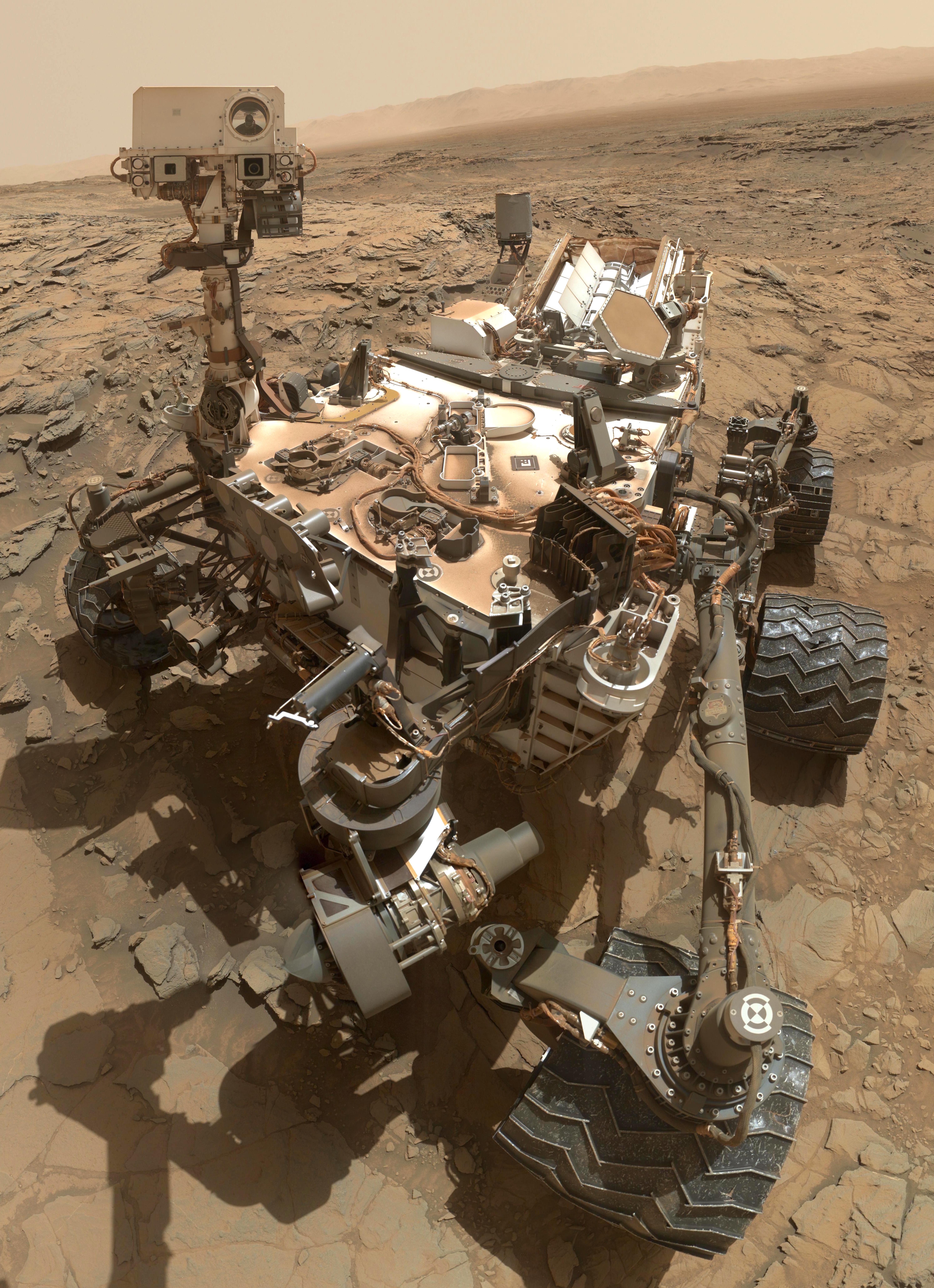
Curiosity is a marvel of robotic engineering, roughly the size of a small SUV. Its power comes from a Radioisotope Thermoelectric Generator (RTG), which uses the heat from decaying plutonium-238 to generate electricity, ensuring continuous operation regardless of sunlight conditions. This robust power source fuels a sophisticated suite of scientific instruments, including the Mast Camera (Mastcam) for high-resolution imaging, the Chemistry and Camera (ChemCam) for analyzing rock composition from a distance using a laser, and the Sample Analysis at Mars (SAM) instrument suite for detailed chemical and mineralogical analysis of collected samples. The rover's rocker-bogie suspension system allows it to traverse challenging Martian terrain, while its robotic arm can drill into rocks and collect samples for onboard analysis.
📊 Key Facts & Numbers
The Mars Science Laboratory mission is a flagship endeavor led by NASA's JPL in Pasadena, California. Key figures instrumental in its development and operation include former JPL Director Charles Elachi, who oversaw much of its early development, and numerous principal investigators for its scientific instruments, such as Roger Wiens for ChemCam and Paul Mahaffy for SAM. The rover's scientific payload was developed by a consortium of universities and research institutions across the United States and internationally. The mission continues to be managed by a dedicated team at JPL, working in close collaboration with scientists at NASA's Science Mission Directorate and other partner organizations.
👥 Key People & Organizations
Curiosity's discoveries have profoundly impacted our understanding of Mars, shifting the narrative from a barren, arid world to one that once harbored potentially habitable environments. Its findings have fueled public imagination and scientific curiosity, inspiring a new generation of space explorers and planetary scientists. The rover's detailed geological surveys and chemical analyses have provided critical context for the search for extant life and have informed the design of subsequent missions, including the Perseverance rover. Images and data from Curiosity are widely disseminated, appearing in documentaries, educational materials, and news reports globally, solidifying its status as a cultural icon of scientific achievement.
🌍 Cultural Impact & Influence
Curiosity is currently ascending the slopes of Mount Sharp (Aeolis Mons), exploring increasingly ancient geological layers that hold clues to Mars's climatic evolution. Recent activities have focused on investigating fine-grained sedimentary rocks that may preserve evidence of past habitable conditions. The rover continues to face environmental challenges, including dust accumulation on its solar panels (though less of an issue for its RTG) and the wear and tear of operating in the harsh Martian environment. NASA's Mars Exploration Program continues to prioritize Curiosity's scientific return, ensuring its operations are optimized for maximum discovery.
⚡ Current State & Latest Developments
While widely celebrated, the immense cost of the Curiosity rover has drawn scrutiny. Some critics have questioned whether such resources could have been better allocated to other scientific endeavors or human spaceflight initiatives. Furthermore, the complexity of the mission and the rover itself has led to occasional technical challenges, though the engineering team has consistently found innovative solutions. Debates also persist within the scientific community regarding the interpretation of certain data, particularly concerning the definitive evidence for past life, which remains an elusive but compelling goal.
🤔 Controversies & Debates
The future of Curiosity is intrinsically linked to the ongoing exploration of Gale Crater and the potential for future Mars missions. Scientists anticipate that Curiosity will continue its ascent of Mount Sharp for several more years, potentially reaching higher elevations and uncovering more about Mars's transition from a wetter, warmer planet to the cold desert it is today. Its findings will be crucial for planning future sample return missions and eventual human expeditions. While its operational lifespan is finite, the data it continues to gather will remain a cornerstone of Martian science for decades to come, informing our understanding of planetary evolution and the potential for life beyond Earth.
🔮 Future Outlook & Predictions
Curiosity's primary application is scientific research, providing invaluable data on Martian geology, atmosphere, and potential habitability. However, the technologies developed for the rover have found broader applications. The advanced drilling and sample collection mechanisms have implications for terrestrial resource exploration and environmental monitoring. The sophisticated imaging and analytical instruments have paved the way for advancements in remote sensing and materials science. Furthermore, the mission's success serves as a powerful educational tool, inspiring students to pursue careers in STEM fields and fostering public engagement with space exploration.
💡 Practical Applications
The scientific legacy of the Curiosity rover is deeply intertwined with the broader field of planetary science and the ongoing quest to understand Mars. Its findings directly inform research into astrobiology, the study of life's origins and potential existence elsewhere in the universe. Related topics include the history of Mars exploration, the engineering challenges of spacecraft design for extreme environments, and the geological processes that shape rocky planets. For deeper reading, one might explore the scientific papers published in journals like Science and Nature, or delve into the extensive mission archives available through NASA's Mars Science website.
Key Facts
- Category
- technology
- Type
- product