
Contents
Overview
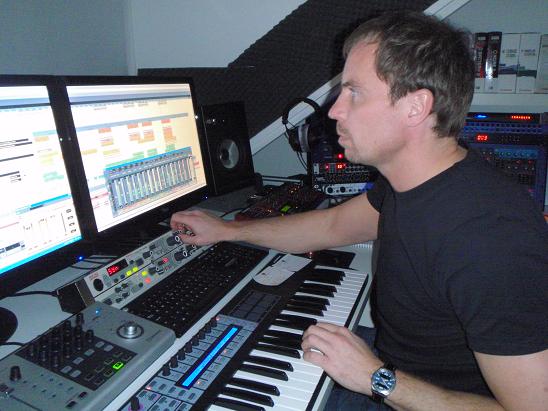
Electronic music technology refers to the array of instruments, devices, and software that generate, manipulate, and record sound using electrical and digital principles. This technological cascade has not only created entirely new sonic palettes but has fundamentally altered music production, performance, and consumption, democratizing creation through accessible Digital Audio Workstations (DAWs) like Ableton Live and Logic Pro, while also pushing the boundaries of sonic possibility for established artists and studios.
🎵 Origins & History
The birth of musique concrète occurred in France by figures like Pierre Schaeffer and Pierre Henry. Early electronic music studios like the Studio for Electronic Music of the WDR in Cologne, Germany, fostered innovation from composers such as Karlheinz Stockhausen.
⚙️ How It Works
At its core, electronic music technology relies on the manipulation of electrical signals to create and shape sound. Early instruments often used vacuum tubes or early transistors to generate waveforms (sine, square, sawtooth, triangle) via oscillators. These raw sounds were then processed through filters to alter their harmonic content, amplifiers to control their loudness, and envelope generators to shape their temporal characteristics (attack, decay, sustain, release). The development of voltage-controlled modules allowed for dynamic interaction between different components, forming the basis of modular synthesizers. This enables precise control over parameters, complex sound modeling, and the creation of effects like reverb and delay. Digital Audio Workstations (DAWs) integrate these capabilities, allowing users to record, edit, mix, and master audio and MIDI data within a single software environment, often powered by sophisticated plugins that emulate classic hardware or create entirely new sonic textures.
📊 Key Facts & Numbers
The global market for music production hardware and software is substantial. The DAW market alone sees millions of users worldwide, with platforms like Ableton Live and FL Studio boasting user bases in the millions each. Over 100,000 synthesizers and MIDI controllers are sold each year, a figure that has seen steady growth. The revenue generated by music software plugins, which extend the capabilities of DAWs, is estimated to be over $1 billion. Streaming services, which heavily feature electronic music, generate billions in revenue, with platforms like Spotify and Apple Music accounting for the majority. The number of electronic music tracks uploaded to platforms like SoundCloud and YouTube daily is in the hundreds of thousands, demonstrating the sheer volume of content produced using these technologies.
👥 Key People & Organizations
Pioneers like Léon Theremin and Maurice Martenot introduced early electronic instruments, while composers such as Karlheinz Stockhausen and Edgard Varèse pushed the artistic boundaries of electronic sound. The development of the modern synthesizer is inextricably linked to figures like Robert Moog and Don Buchla, whose distinct design philosophies shaped generations of instruments. In the realm of digital audio, companies like Native Instruments and Steinberg (creators of Cubase) have been instrumental in developing accessible software. Aphex Twin (Richard D. James) and Björk are celebrated artists who have masterfully employed these technologies to create groundbreaking music. Organizations like the Institute of Electronic Music and Acoustics (IEM) in Vienna and KASK in Brussels continue to be hubs for research and education in electronic music technology.
🌍 Cultural Impact & Influence
Electronic music technology has fundamentally reshaped the cultural landscape of music. It democratized music creation, moving it from expensive, specialized studios to bedrooms equipped with a computer and software, a shift epitomized by the rise of bedroom producers. Genres like techno, house, drum and bass, and dubstep owe their existence entirely to these tools. The visual culture surrounding electronic music, from the laser shows of Kraftwerk concerts to the elaborate stage designs of modern EDM festivals, is deeply intertwined with technological capabilities. Furthermore, electronic music technology has permeated other genres, with synthesizers and digital effects becoming standard in pop, rock, and film scoring, influencing how audiences perceive and consume music globally. The accessibility of tools like GarageBand has introduced millions to music production, fostering a new generation of creators.
⚡ Current State & Latest Developments
AI-powered tools are emerging for tasks ranging from automatic mixing and mastering (e.g., iZotope's Neutron and Ozone) to generative music composition and sound design. Virtual Reality (VR) and Augmented Reality (AR) are also beginning to influence music creation and performance, offering immersive new ways to interact with sound and visuals. Cloud-based collaboration platforms are becoming more sophisticated, allowing musicians to work together remotely on projects in real-time. The ongoing miniaturization and increased power of mobile devices mean that high-quality music production is increasingly possible on smartphones and tablets, further decentralizing creation. The push for more sustainable and energy-efficient hardware also represents a growing trend in the industry.
🤔 Controversies & Debates
A significant debate surrounds the role of AI in music creation. Critics argue that AI-generated music lacks genuine human emotion and artistic intent, potentially devaluing human creativity and leading to a homogenization of sound. Others counter that AI is merely a tool, analogous to a synthesizer or a DAW, that can augment human creativity and unlock new artistic possibilities. Another ongoing discussion concerns the environmental impact of the vast server farms required for cloud-based production and AI processing. Furthermore, the accessibility of powerful tools raises questions about copyright and intellectual property, particularly when AI models are trained on existing music without explicit permission, as seen in controversies involving companies like Google and OpenAI. The increasing reliance on digital formats also sparks debate about the long-term preservation of music and the potential for data degradation or obsolescence.
🔮 Future Outlook & Predictions
The future of electronic music technology points towards even deeper integration of AI, potentially leading to hyper-personalized music experiences and AI-driven compositional partners. We can expect more intuitive and gestural control interfaces, possibly incorporating [[brain-computer-interface|Brain-Computer Interfaces (BCI
Key Facts
- Category
- technology
- Type
- topic