
Contents
- 📐 Introduction to Euclidean Space
- 📝 History of Euclidean Geometry
- 📊 Dimensions of Euclidean Space
- 📈 Euclidean Lines and Planes
- 🔍 Properties of Euclidean Space
- 📚 Applications of Euclidean Geometry
- 🤔 Non-Euclidean Geometries
- 📊 Modern Mathematics and Euclidean Space
- 📝 Controversies and Debates
- 🔮 Future of Euclidean Space Research
- 📊 Computational Geometry and Euclidean Space
- 📚 Educational Resources for Euclidean Geometry
- Frequently Asked Questions
- Related Topics
Overview
Euclidean space, developed by ancient Greek mathematician Euclid, is a fundamental concept in mathematics that describes a flat, continuous space where the laws of geometry apply. This space is characterized by its five postulates, including the concept of points, lines, and planes, and has been widely influential in fields such as physics, engineering, and computer science. The development of Euclidean space has been marked by significant contributions from mathematicians such as René Descartes and Isaac Newton, who built upon Euclid's work to create new mathematical frameworks. Despite its limitations, Euclidean space remains a crucial tool for understanding and describing the world around us, with applications in fields such as architecture, design, and data analysis. However, its assumptions have been challenged by alternative theories, such as non-Euclidean geometry, which have expanded our understanding of space and its properties. As our understanding of the universe continues to evolve, the concept of Euclidean space remains a vital foundation for further exploration and discovery, with ongoing research and debate surrounding its role in modern mathematics and science.
📐 Introduction to Euclidean Space
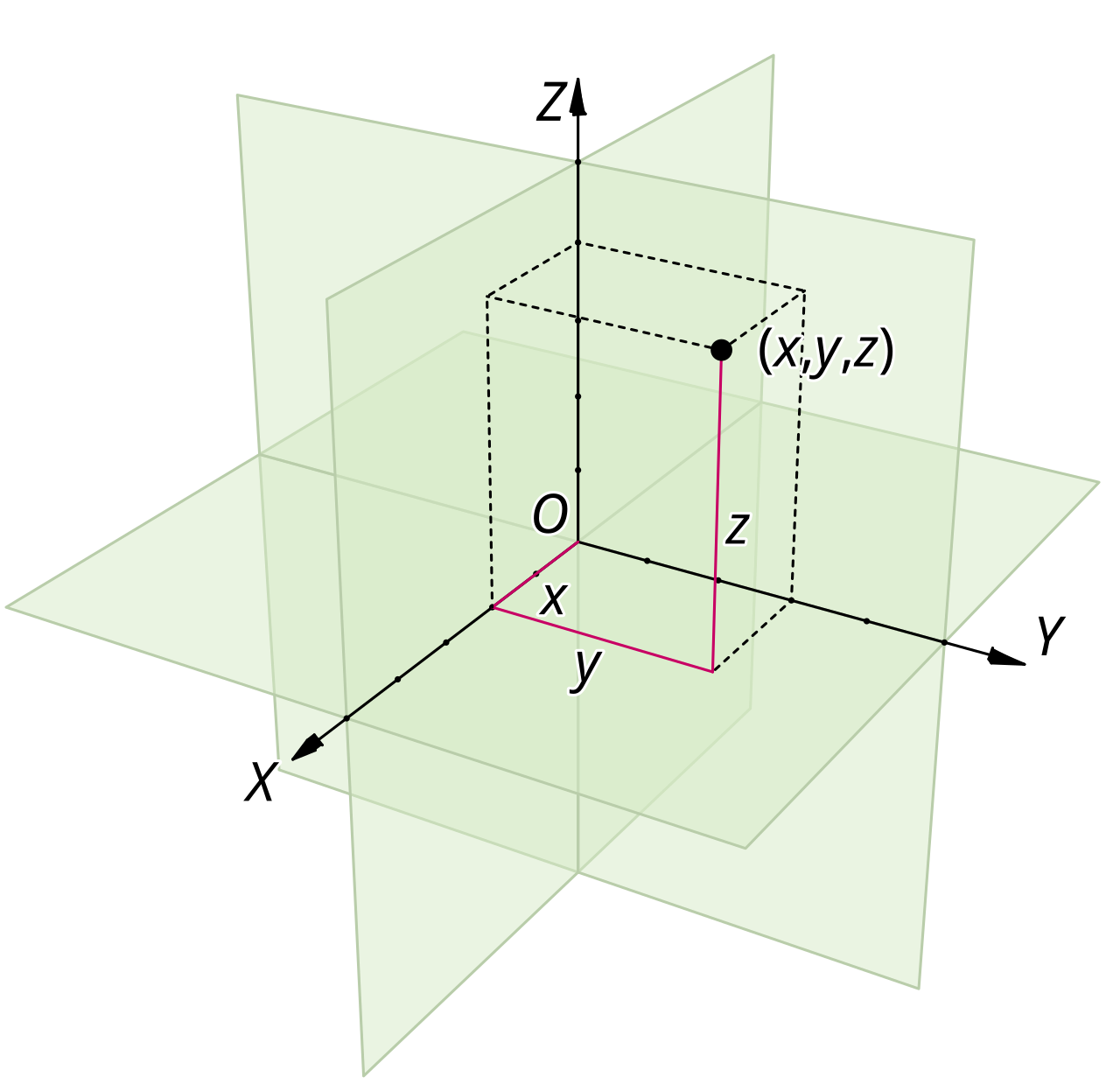
The concept of Euclidean space is a fundamental aspect of modern geometry, as seen in Geometry and Mathematics. It is intended to represent physical space, and its properties and structures have been extensively studied in various fields, including Physics and Engineering. The original concept of Euclidean space was developed by the ancient Greek mathematician Euclid in his book Elements, where he described the three-dimensional space of Euclidean geometry. However, in modern mathematics, Euclidean spaces of any positive integer dimension n are considered, which are called Euclidean n-spaces when one wants to specify their dimension, as discussed in Mathematical Analysis.
📝 History of Euclidean Geometry
The history of Euclidean geometry dates back to ancient Greece, where Euclid developed the concept of Euclidean space in his book Elements. The book, which consists of 13 volumes, is one of the most influential works in the history of mathematics, and its impact can be seen in various fields, including Architecture and Art. Over the centuries, mathematicians such as Archimedes and René Descartes have contributed to the development of Euclidean geometry, as discussed in History of Mathematics. The concept of Euclidean space has undergone significant changes and extensions, particularly in the 19th and 20th centuries, with the development of Non-Euclidean Geometries.
📊 Dimensions of Euclidean Space
Euclidean spaces can have any positive integer dimension n, which are called Euclidean n-spaces when one wants to specify their dimension. For n equal to one or two, they are commonly called respectively Euclidean Lines and Euclidean Planes. The qualifier 'Euclidean' is used to distinguish Euclidean spaces from other spaces that were later considered in Physics and modern mathematics, such as Riemannian Geometry. The concept of Euclidean space is closely related to the concept of Metric Space, which is a mathematical space with a metric that defines the distance between points. Euclidean spaces are a special type of metric space, where the metric is defined by the Euclidean Distance formula.
📈 Euclidean Lines and Planes
Euclidean lines and planes are special cases of Euclidean spaces, where the dimension is one or two, respectively. Euclidean lines are one-dimensional spaces, where each point is represented by a single coordinate, as discussed in Coordinate Geometry. Euclidean planes, on the other hand, are two-dimensional spaces, where each point is represented by two coordinates. The properties and structures of Euclidean lines and planes have been extensively studied in various fields, including Algebra and Calculus. The concept of Euclidean lines and planes is closely related to the concept of Vector Space, which is a mathematical space with a set of vectors that can be added and scaled.
🔍 Properties of Euclidean Space
Euclidean space has several important properties, including the concept of Distance and Angle. The distance between two points in Euclidean space is defined by the Euclidean Distance formula, which is a fundamental concept in geometry and trigonometry. The angle between two lines or planes in Euclidean space is defined by the Dot Product formula, which is a fundamental concept in linear algebra. The properties and structures of Euclidean space have been extensively studied in various fields, including Physics and Engineering. The concept of Euclidean space is closely related to the concept of Symmetry, which is a fundamental concept in mathematics and physics.
📚 Applications of Euclidean Geometry
Euclidean geometry has numerous applications in various fields, including Physics, Engineering, and Computer Science. The concept of Euclidean space is used to describe the motion of objects in Classical Mechanics and the behavior of light in Optics. The properties and structures of Euclidean space are also used in Computer Graphics and Game Development. The concept of Euclidean geometry is closely related to the concept of Fractals, which are mathematical sets that exhibit self-similarity at different scales.
🤔 Non-Euclidean Geometries
Non-Euclidean geometries are mathematical spaces that differ from Euclidean space in terms of their properties and structures. The most well-known non-Euclidean geometries are Hyperbolic Geometry and Elliptical Geometry, which were developed in the 19th century by mathematicians such as János Bolyai and Nikolai Lobachevsky. Non-Euclidean geometries have numerous applications in various fields, including Physics and Astronomy. The concept of non-Euclidean geometries is closely related to the concept of Curvature, which is a fundamental concept in differential geometry.
📊 Modern Mathematics and Euclidean Space
Modern mathematics has significantly extended and generalized the concept of Euclidean space, particularly in the 20th century with the development of Topology and Differential Geometry. The concept of Euclidean space is closely related to the concept of Manifold, which is a mathematical space that is locally Euclidean. The properties and structures of Euclidean space have been extensively studied in various fields, including Algebraic Topology and Geometric Analysis. The concept of Euclidean space is also closely related to the concept of Category Theory, which is a branch of mathematics that studies the commonalities and differences between various mathematical structures.
📝 Controversies and Debates
The concept of Euclidean space has been the subject of numerous controversies and debates throughout history, particularly in the 19th and 20th centuries. One of the most significant debates was between Euclid and Archimedes on the nature of infinity and the method of exhaustion, as discussed in History of Mathematics. The concept of Euclidean space has also been criticized by mathematicians such as Bertrand Russell and Alfred North Whitehead, who argued that it is based on a flawed understanding of space and time. The concept of Euclidean space is closely related to the concept of Philosophy of Mathematics, which is a branch of philosophy that studies the nature and foundations of mathematics.
🔮 Future of Euclidean Space Research
The future of Euclidean space research is closely tied to the development of new mathematical theories and models, particularly in the fields of Physics and Computer Science. The concept of Euclidean space is likely to continue to play a central role in the development of new technologies and applications, including Artificial Intelligence and Virtual Reality. The properties and structures of Euclidean space are also likely to be further generalized and extended, particularly in the context of Non-Euclidean Geometries and Differential Geometry. The concept of Euclidean space is closely related to the concept of Complexity Theory, which is a branch of computer science that studies the resources required to solve computational problems.
📊 Computational Geometry and Euclidean Space
Computational geometry is a branch of computer science that studies the algorithms and data structures used to solve geometric problems, particularly in the context of Euclidean Geometry. The concept of Euclidean space is central to computational geometry, and its properties and structures are used to develop efficient algorithms for solving geometric problems. The field of computational geometry has numerous applications in various fields, including Computer Graphics and Game Development. The concept of Euclidean space is closely related to the concept of Geometric Algorithms, which are algorithms that solve geometric problems using geometric techniques.
📚 Educational Resources for Euclidean Geometry
There are numerous educational resources available for learning Euclidean geometry, including textbooks, online courses, and software packages. Some of the most popular textbooks on Euclidean geometry include Euclid's Elements and Geometry for Dummies. Online courses on Euclidean geometry are available on platforms such as Coursera and edX. Software packages such as Mathematica and Maple provide interactive tools for visualizing and exploring Euclidean geometry. The concept of Euclidean space is closely related to the concept of Mathematical Education, which is a branch of education that studies the teaching and learning of mathematics.
Key Facts
- Year
- 300
- Origin
- Ancient Greece
- Category
- Mathematics
- Type
- Mathematical Concept
Frequently Asked Questions
What is Euclidean space?
Euclidean space is the fundamental space of geometry, intended to represent physical space. It is a mathematical space with a set of points, lines, and planes that satisfy certain properties and axioms, as discussed in Geometry and Mathematics. The concept of Euclidean space is closely related to the concept of Metric Space, which is a mathematical space with a metric that defines the distance between points.
Who developed the concept of Euclidean space?
The concept of Euclidean space was developed by the ancient Greek mathematician Euclid in his book Elements. However, the concept of Euclidean space has undergone significant changes and extensions over the centuries, particularly in the 19th and 20th centuries, with the development of Non-Euclidean Geometries. The concept of Euclidean space is closely related to the concept of Mathematical Analysis, which is a branch of mathematics that studies the properties and behaviors of mathematical functions.
What are the properties of Euclidean space?
Euclidean space has several important properties, including the concept of Distance and Angle. The distance between two points in Euclidean space is defined by the Euclidean Distance formula, which is a fundamental concept in geometry and trigonometry. The angle between two lines or planes in Euclidean space is defined by the Dot Product formula, which is a fundamental concept in linear algebra. The concept of Euclidean space is closely related to the concept of Symmetry, which is a fundamental concept in mathematics and physics.
What are the applications of Euclidean geometry?
Euclidean geometry has numerous applications in various fields, including Physics, Engineering, and Computer Science. The concept of Euclidean space is used to describe the motion of objects in Classical Mechanics and the behavior of light in Optics. The properties and structures of Euclidean space are also used in Computer Graphics and Game Development. The concept of Euclidean geometry is closely related to the concept of Fractals, which are mathematical sets that exhibit self-similarity at different scales.
What is the difference between Euclidean and non-Euclidean geometries?
Euclidean geometry is a mathematical space that satisfies certain properties and axioms, such as the concept of Distance and Angle. Non-Euclidean geometries, on the other hand, are mathematical spaces that differ from Euclidean space in terms of their properties and structures. The most well-known non-Euclidean geometries are Hyperbolic Geometry and Elliptical Geometry, which were developed in the 19th century by mathematicians such as János Bolyai and Nikolai Lobachevsky. The concept of non-Euclidean geometries is closely related to the concept of Curvature, which is a fundamental concept in differential geometry.
How is Euclidean space used in computer science?
Euclidean space is used in computer science to solve geometric problems, particularly in the context of Computer Graphics and Game Development. The properties and structures of Euclidean space are used to develop efficient algorithms for solving geometric problems, such as Ray Tracing and Collision Detection. The concept of Euclidean space is closely related to the concept of Geometric Algorithms, which are algorithms that solve geometric problems using geometric techniques.
What are the educational resources available for learning Euclidean geometry?
There are numerous educational resources available for learning Euclidean geometry, including textbooks, online courses, and software packages. Some of the most popular textbooks on Euclidean geometry include Euclid's Elements and Geometry for Dummies. Online courses on Euclidean geometry are available on platforms such as Coursera and edX. Software packages such as Mathematica and Maple provide interactive tools for visualizing and exploring Euclidean geometry. The concept of Euclidean space is closely related to the concept of Mathematical Education, which is a branch of education that studies the teaching and learning of mathematics.