
Contents
- 📍 Origin & Flow: From Adirondacks to Atlantic
- 🌊 The Tidal Heart: An Estuary's Pulse
- 🏞️ Geological Sculptor: The Glacier's Legacy
- ⚖️ Borderline Influence: New York & New Jersey's Divide
- 🚢 Navigational Lifeline: Commerce and Connection
- 🐠 Biodiversity Hotspot: A Rich Aquatic Ecosystem
- 🏭 Industrial Scars & Environmental Revival
- 🛶 Recreational Playground: Paddling, Sailing, and Views
- Frequently Asked Questions
- Related Topics
Overview
The Hudson River, a tidal estuary stretching 315 miles from the Adirondack Mountains to the Atlantic Ocean, is far more than just a waterway. Historically, it was the lifeblood of indigenous nations, a strategic military objective during the Revolutionary War, and the engine of America's industrial expansion via the Erie Canal. Today, it's a complex ecosystem grappling with pollution and climate change, yet remains a vital corridor for commerce, recreation, and a potent symbol of New York's identity. Its waters have witnessed centuries of human endeavor, from early exploration to modern-day environmental activism, making it a dynamic nexus of history, ecology, and culture.
📍 Origin & Flow: From Adirondacks to Atlantic
The Hudson River begins its journey as a humble mountain stream, born from Henderson Lake in the heart of the Adirondack Mountains of New York. This 315-mile waterway carves a path south, a vital artery flowing through diverse landscapes before meeting the vast Atlantic Ocean. Its source, nestled in the town of Newcomb, belies the immense power and significance it accrues as it meanders towards the sea, shaping the very geography of eastern New York.
🌊 The Tidal Heart: An Estuary's Pulse
The lower half of the Hudson is no mere river; it's a dynamic tidal estuary, a complex meeting point where freshwater from upstate collides with saltwater from the Atlantic. This tidal influence extends surprisingly far north, with the river's flow reversing even at the city of Troy, New York due to the ebb and flow of the ocean tides. This constant push and pull creates a unique aquatic environment, crucial for many species and a defining characteristic of the river's character.
🏞️ Geological Sculptor: The Glacier's Legacy
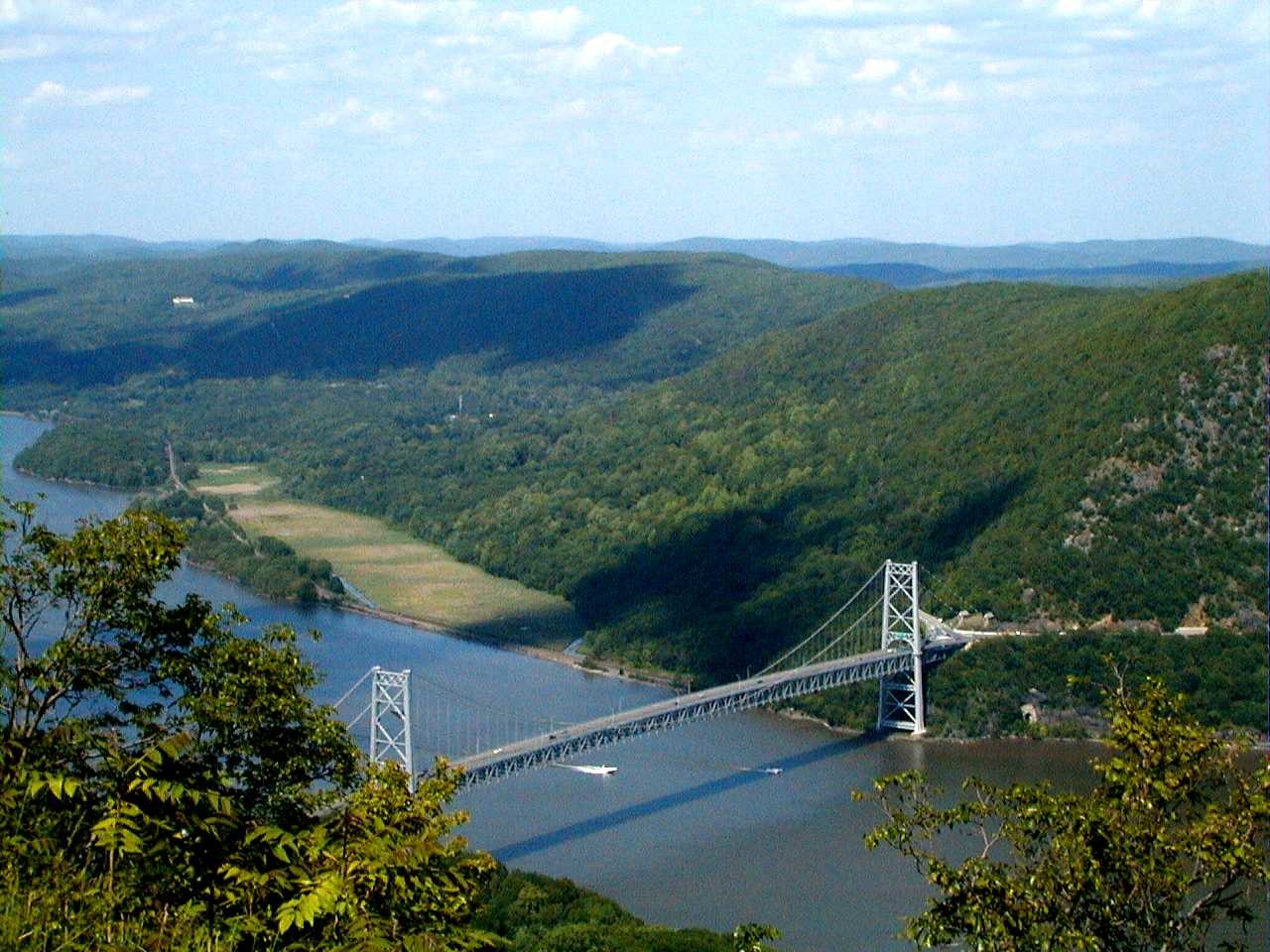
The dramatic depth and width of the lower Hudson are a direct consequence of ancient geological forces. This waterway occupies what was once the Hudson Fjord, a massive inlet carved deep into the bedrock by the immense power of North American glaciers during the last ice age. The lingering imprint of these colossal ice sheets is evident in the river's impressive dimensions, a testament to nature's sculpting power over millennia.
⚖️ Borderline Influence: New York & New Jersey's Divide
For a significant stretch, the Hudson River serves as a natural boundary, delineating the eastern edge of New Jersey from the state of New York. This geographical role extends beyond state lines, also marking numerous county borders upstate. This function as a divider has historically influenced settlement patterns, transportation routes, and even political jurisdictions along its banks.
🐠 Biodiversity Hotspot: A Rich Aquatic Ecosystem
Despite its urban proximity and industrial past, the Hudson River supports a surprisingly rich and diverse ecosystem. It's a crucial habitat for numerous fish species, migratory birds, and other aquatic life. Conservation efforts have worked to restore and protect this biodiversity, making it a vital natural resource within a densely populated region.
🏭 Industrial Scars & Environmental Revival
The river bears the indelible marks of its industrial past, having served as a dumping ground for pollutants for decades. However, the latter half of the 20th century and the early 21st century have seen significant environmental revival efforts. Organizations and government agencies have worked tirelessly to clean up contaminated sites and improve water quality, a complex and ongoing process.
🛶 Recreational Playground: Paddling, Sailing, and Views
Beyond its ecological and historical significance, the Hudson River is a beloved recreational area. Kayakers and paddleboarders navigate its waters, sailboats glide across its surface, and waterfront parks offer stunning vistas for hikers and cyclists. The river provides a vital connection to nature for millions, offering a refreshing escape within the metropolitan sprawl.
Key Facts
- Year
- Pre-Cambrian (geological formation) - Present (ongoing human impact)
- Origin
- Indigenous peoples (e.g., Mohican, Munsee Lenape) named it 'Mahicannituck' (river that flows in both directions).
- Category
- Geography & Environment
- Type
- Geographical Feature
Frequently Asked Questions
Where does the Hudson River start?
The Hudson River originates at Henderson Lake in the Adirondack Mountains, specifically in the town of Newcomb, New York. This pristine mountain source is a stark contrast to the river's more famous lower reaches near New York City.
Is the Hudson River saltwater or freshwater?
The Hudson River is a tidal estuary, meaning it's a mix of both. The upper portion is freshwater, but as it flows south towards New York Bay, it becomes increasingly brackish as it mixes with saltwater from the Atlantic Ocean. The tidal influence means the water's salinity can even fluctuate with the tides.
How deep is the Hudson River?
The depth of the Hudson River varies considerably. While it can be relatively shallow in its upper reaches, the lower, estuarine section, particularly the Hudson Fjord, can be quite deep, reaching depths of over 160 feet (49 meters) in some areas, especially near the George Washington Bridge.
What is the Hudson River famous for?
The Hudson River is renowned for its historical significance as a transportation route, its dramatic geological formation as a glacial fjord, its role as a border between New York and New Jersey, and its ongoing environmental revival efforts. It's also a popular spot for recreation and offers iconic views of the New York City skyline.
Can you swim in the Hudson River?
Swimming in the Hudson River is generally not recommended, especially in the lower sections near urban areas, due to historical pollution and ongoing water quality concerns. While some designated areas and specific events might allow swimming, it's crucial to check local advisories and water quality reports before considering it.
What animals live in the Hudson River?
The Hudson River supports a diverse range of wildlife. Common inhabitants include various species of fish like striped bass and shad, numerous migratory birds, and smaller aquatic organisms. Efforts to improve water quality have helped in the return of some species that were previously absent.