
Contents
- 🎵 Origins & History
- ⚙️ How It Works
- 📊 Key Facts & Numbers
- 👥 Key People & Organizations
- 🌍 Cultural Impact & Influence
- ⚡ Current State & Latest Developments
- 🤔 Controversies & Debates
- 🔮 Future Outlook & Predictions
- 💡 Practical Applications
- 📚 Related Topics & Deeper Reading
- Frequently Asked Questions
- Related Topics
Overview
The genesis of At Folsom Prison can be traced back to Cash's 1955 hit song, "Folsom Prison Blues." For years, he harbored a desire to perform and record within the confines of a correctional facility, seeing it as a way to connect with a population often overlooked by mainstream society. This ambition was repeatedly stymied by record label executives who deemed the idea too risky. However, a shift in leadership at Columbia Records in 1967, placing Bob Johnston in charge of Cash's production, finally opened the door. Cash, having recently overcome significant struggles with drug abuse and seeking to reignite his career after a period of declining popularity, seized the opportunity. He meticulously planned the performance, aiming to capture the raw, unvarnished reality of prison life and the spirit of the inmates. The recording sessions at Folsom State Prison on January 13, 1968, were the culmination of this long-held dream, a bold move that would redefine his artistic legacy.
⚙️ How It Works
The recording of At Folsom Prison was a meticulously orchestrated event designed to capture authenticity. Cash, accompanied by his wife June Carter Cash, guitarist Luther Perkins (of The Tennessee Three), and Carl Perkins, performed two distinct shows for the inmates. The key to the album's success lay in its unvarnished sound, eschewing studio polish for the gritty reality of a live performance within the prison walls. Johnston employed a minimalist recording setup, capturing the ambient sounds of the prison – the clanging of cell doors, the cheers and shouts of the inmates – alongside Cash's resonant baritone and the tight, driving rhythm of his band. This approach created an immersive experience, allowing listeners outside to feel as though they were present, witnessing Cash's communion with the incarcerated audience. The selection of songs, including powerful renditions of "Folsom Prison Blues," "I Walk the Line," and "Greystone Chapel," further amplified the album's thematic weight.
📊 Key Facts & Numbers
At Folsom Prison achieved remarkable commercial success, far exceeding initial expectations. The album debuted at number one on the Billboard Top Country Albums chart and remained there for several weeks. It also climbed to number 11 on the Billboard 200, marking Cash's highest chart position in years. The lead single, "Folsom Prison Blues (Live)," became Cash's first top-40 hit on the Billboard Hot 100 since 1964, reaching number 32. The album has since been certified triple platinum by the Recording Industry Association of America (RIAA), signifying sales of over 3 million units in the United States. Worldwide, it has sold millions more, cementing its status as a landmark release in country music history.
👥 Key People & Organizations
The creation and enduring legacy of At Folsom Prison are inextricably linked to several key figures. Johnny Cash, the iconic "Man in Black," conceived the project and delivered the performance that defined it. His wife, June Carter Cash, provided crucial emotional and vocal support, her presence a stabilizing force. Producer Bob Johnston was instrumental in greenlighting the project and capturing its raw essence, navigating the challenges of recording in a prison environment. Guitarist Luther Perkins and drummer W.S. Holland of The Tennessee Three provided the signature Cash sound, while Carl Perkins added his legendary rockabilly guitar licks. The inmates of Folsom State Prison themselves were an essential element, their enthusiastic reception creating the unique atmosphere that permeates the album. Columbia Records, initially hesitant, ultimately distributed the groundbreaking release.
🌍 Cultural Impact & Influence
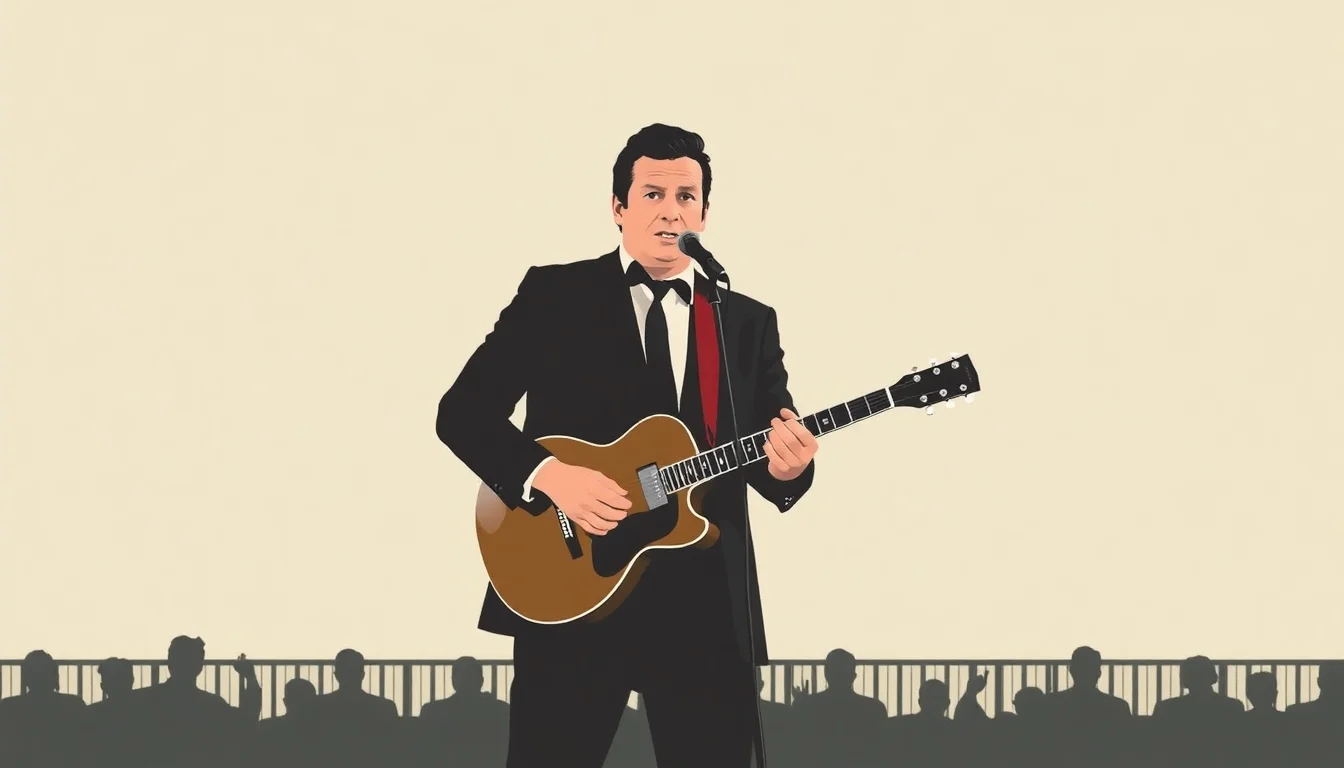
The cultural impact of At Folsom Prison cannot be overstated. It single-handedly revitalized Johnny Cash's career, transforming him from a seasoned but somewhat fading star into a cultural icon. The album's raw authenticity and Cash's empathetic portrayal of the incarcerated resonated deeply with a generation disillusioned by the Vietnam War and social upheaval. It legitimized live prison concerts as a viable artistic endeavor, influencing subsequent artists like Merle Haggard and David Bowie to explore similar themes and settings. The album's success also broadened the appeal of country music beyond its traditional audience, introducing its themes and sounds to a wider, more diverse demographic. The iconic cover photo, featuring Cash silhouetted against the prison backdrop, became an enduring image in popular culture, synonymous with rebellion, redemption, and the outlaw spirit.
⚡ Current State & Latest Developments
Decades after its release, At Folsom Prison continues to be celebrated and studied. In 2000, a remastered version was released, featuring additional tracks and expanded liner notes, introducing the album to a new generation of listeners. The 50th anniversary of the recording was marked in 2018 with a special reissue, "The Complete 1968 Folsom Prison Recordings", which included the full, unedited performances from both the morning and afternoon shows, offering an unprecedented look at the sessions. The album's influence remains palpable in contemporary music, with artists frequently citing it as a formative work. Its enduring popularity is evident in its continued presence on streaming platforms and its consistent placement on "greatest albums of all time" lists compiled by publications like Rolling Stone and AllMusic.
🤔 Controversies & Debates
While widely lauded, At Folsom Prison has not been without its critics and controversies. Some have questioned the ethics of profiting from the performances of incarcerated individuals, particularly given the power dynamic between Cash and the inmates. There have also been debates about the extent to which the album romanticizes prison life, potentially overshadowing the harsh realities faced by those serving time. Furthermore, the role of producer Bob Johnston in orchestrating the event and selecting the final tracks has been a subject of discussion, with some suggesting that the "live" feel was enhanced through careful editing and the inclusion of inmate reactions that may have been amplified or even staged. The authenticity of the recording, while celebrated, has been scrutinized by those seeking a purely unadulterated account of the event.
🔮 Future Outlook & Predictions
The enduring appeal of At Folsom Prison suggests its legacy will continue to resonate. Future outlooks point to ongoing reinterpretations and homages from contemporary artists exploring themes of justice, redemption, and the outsider experience. The potential for further archival releases, perhaps including unreleased material or deeper dives into the production process, remains. As discussions around criminal justice reform gain momentum, the album's historical context as a moment of empathetic engagement with the incarcerated may find renewed relevance. It's conceivable that new documentaries or biographical works will continue to explore the profound impact of this single recording on Johnny Cash's life and on American culture at large, ensuring its place in the pantheon of influential musical works.
💡 Practical Applications
The primary application of At Folsom Prison is as a seminal musical artifact, but its influence extends into broader cultural and social spheres. It serves as a powerful case study in music marketing and artist revitalization, demonstrating how a bold, authentic artistic statement can transcend commercial expectations. For educators, the album provides a rich text for examining themes of social justice, empathy, and the role of art in addressing societal issues. It's also a key reference point for understanding the evolution of outlaw country music and the broader counterculture movement of the late 1960s. Furthermore, the recording techniques employed by Bob Johnston offer insights for students of audio engineering and live sound production, highlighting the power of capturing raw, unpolished performances. The album's narrative also informs discussions about rehabilitation and the human condition within the context of the American criminal justice system.
Key Facts
- Year
- 1968
- Origin
- United States
- Category
- culture
- Type
- album
Frequently Asked Questions
What makes the 'Johnny Cash at Folsom Prison' album so significant?
The album is significant because it marked a major career resurgence for Johnny Cash, transforming him into a cultural icon. Recorded live inside Folsom State Prison, its raw authenticity and Cash's empathetic connection with the inmates resonated deeply, making it a critical and commercial success. It reached number one on the Billboard Top Country Albums chart and number 11 on the Billboard 200, proving that music from the margins could achieve mainstream acclaim.
When and where was 'Johnny Cash at Folsom Prison' recorded?
The album was recorded live on January 13, 1968, at Folsom State Prison in Represa, California. Johnny Cash performed two shows for the inmates, a morning session and an afternoon session, both of which were captured for the recording. The unique acoustics and atmosphere of the prison yard and auditorium were integral to the album's distinctive sound.
Who performed on the 'Johnny Cash at Folsom Prison' album?
The album features Johnny Cash as the lead performer. He was backed by his touring band, The Tennessee Three, which included Luther Perkins on guitar and W.S. Holland on drums. Also featured were Carl Perkins on guitar and June Carter Cash on vocals and emotional support. The enthusiastic participation of the Folsom inmates themselves was also a crucial element of the performance.
What was the impact of 'Folsom Prison Blues' on the album's creation?
Cash's 1955 hit song "Folsom Prison Blues" was the initial inspiration for the entire project. Having written and performed the song for years, Cash felt a strong connection to the prison population and wanted to record live within a correctional facility. The song's enduring popularity and its theme of regret and consequence made it a natural centerpiece for the live album, and its inclusion was a direct nod to the album's conceptual origins.
Were there any controversies surrounding the 'Johnny Cash at Folsom Prison' recording?
Yes, some controversies have arisen over the years. Debates have centered on the ethics of Johnny Cash profiting from performances by incarcerated individuals, and whether the album romanticized prison life. Additionally, questions have been raised about the authenticity of the 'live' recording, with some suggesting that producer Bob Johnston may have enhanced the inmate reactions or staged certain elements to create a more dramatic effect. Despite these discussions, the album's artistic merit and cultural significance remain widely recognized.
How did 'Johnny Cash at Folsom Prison' affect Johnny Cash's career?
The album was a monumental turning point for Johnny Cash. After a period of declining popularity and personal struggles with drug abuse, 'At Folsom Prison' revitalized his career, re-establishing him as a major force in music. It solidified his 'outlaw' image, demonstrating his ability to connect with a marginalized audience and produce raw, powerful art. The success of the album led to further prison concerts, including At San Quentin, and a renewed surge in his popularity and critical acclaim.
What is the legacy of 'Johnny Cash at Folsom Prison' today?
The legacy of 'Johnny Cash at Folsom Prison' is that of a groundbreaking live album that redefined country music and cemented Johnny Cash's status as a cultural icon. It demonstrated the power of authentic performance and empathetic storytelling, influencing countless artists. The album remains a benchmark for live recordings and a testament to Cash's unique ability to bridge the gap between the mainstream and the marginalized, ensuring its place in music history for generations to come.