
Contents
Overview
The quest to define global wonders predates the modern era, with the original Seven Wonders of the Ancient World cataloged by Hellenic civilization. Building on this legacy, the New 7 Wonders Foundation, founded by Bernard Weber, launched a massive, crowd-sourced initiative to identify contemporary marvels. The campaign officially kicked off in 2001, inviting nominations and eventually narrowing down a field of 200 monuments to a final 21 by 2006. This process was designed to be a global conversation, reflecting popular opinion rather than an academic consensus, a departure from earlier lists. The foundation's goal was to create a new, universally recognized set of wonders that resonated with people across diverse cultures and continents, aiming to foster a sense of shared heritage and appreciation for human achievement.
⚙️ How It Works
The selection process for the New 7 Wonders was a hybrid of public participation and curated selection. Initially, a panel of experts, including former UNESCO Director-General Federico Mayor Zaragoza, shortlisted 200 existing monuments from over 400 nominations. From this shortlist, a global public vote, conducted primarily through a dedicated website and telephone lines, determined the final seven. The voting system, however, was designed for accessibility rather than strict scientific rigor, allowing individuals to cast multiple votes, a feature that would later draw criticism. The foundation's approach democratized the selection, empowering millions to have a direct say in which sites would be recognized, thereby generating unprecedented global engagement with heritage sites.
📊 Key Facts & Numbers
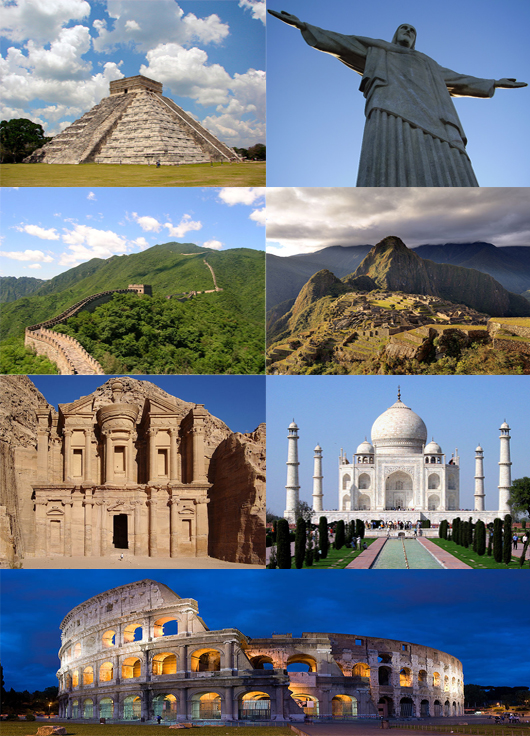
The New 7 Wonders poll captured the world's attention, registering an estimated 100 million votes. The final announcement on July 7, 2007, was a global event, broadcast live from Estádio da Luz in Lisbon, Portugal. The seven chosen sites represent a diverse geographical spread: the Great Wall of China, Petra in Jordan, Christ the Redeemer in Rio de Janeiro, Machu Picchu in Peru, Chichen Itza in Mexico, the Colosseum in Rome, and the Taj Mahal in India. The campaign reportedly cost $50 million to run, funded through sponsorships and voting revenues, and generated significant media coverage worldwide, far exceeding the reach of many academic heritage designations.
👥 Key People & Organizations
The driving force behind the New 7 Wonders campaign was Bernard Weber, a Swiss-born author and filmmaker, who conceived and led the New 7 Wonders Foundation. While Weber was the primary architect, the foundation itself, based in Zurich, Switzerland, was the organizational entity responsible for executing the massive global poll. Notable figures who lent their names or expertise to the initial stages included Federico Mayor Zaragoza, former Director-General of UNESCO, who advised on the nomination process. The campaign also saw active participation from national governments and tourism boards of countries with finalist sites, who often launched their own campaigns to encourage voting for their respective monuments.
🌍 Cultural Impact & Influence
The cultural resonance of the New 7 Wonders has been profound, transforming the chosen sites into global icons and significantly boosting their tourism appeal. For instance, Chichen Itza saw a surge in visitor numbers following its designation, and the Taj Mahal has long been a symbol of India's rich history. The campaign fostered a sense of global pride and encouraged discussions about heritage preservation worldwide. Beyond the chosen seven, the initiative also sparked interest in other nominated sites, indirectly promoting a broader appreciation for historical monuments. The visual representation of these wonders has permeated popular culture, appearing in films, advertisements, and educational materials, cementing their place in the global consciousness.
⚡ Current State & Latest Developments
The New 7 Wonders Foundation has continued its work beyond the initial 2007 announcement. In 2011, they launched the New 7 Wonders of Nature campaign, which concluded in 2011 with the announcement of seven natural sites, including the Amazon Rainforest and Ha Long Bay. More recently, the foundation initiated the New 7 Wonders Cities campaign, with winners announced in 2014, featuring cities like Beirut and Doha. These subsequent campaigns aim to broaden the scope of recognized global marvels, moving beyond individual structures to encompass natural landscapes and urban environments, continuing the legacy of public-driven heritage selection.
🤔 Controversies & Debates
The New 7 Wonders campaign has been a lightning rod for controversy, primarily concerning its methodology and perceived lack of scientific validity. Critics, including UNESCO, have pointed out that the poll was essentially a popularity contest, susceptible to manipulation and not representative of expert opinion. The ability for individuals to cast multiple votes, often facilitated by national campaigns, undermined the democratic ideal. Furthermore, the exclusion of significant historical sites like the Pyramids of Giza (which was granted honorary status) and the Eiffel Tower from the final list, despite their global recognition, fueled debate. The commercial aspects of the campaign, including voting fees and sponsorships, also raised questions about the integrity of the selection process.
🔮 Future Outlook & Predictions
Looking ahead, the concept of globally recognized wonders is likely to evolve. While the New 7 Wonders Foundation continues its initiatives, other organizations and platforms are emerging to curate and promote heritage sites. The rise of digital technologies and virtual reality may also offer new ways to experience and appreciate these wonders, potentially shifting the focus from physical visitation to digital accessibility. Future lists might incorporate criteria beyond historical significance, such as architectural innovation, cultural impact, or even environmental sustainability. The ongoing debate about what constitutes a 'wonder' ensures that such discussions will continue, potentially leading to new, more inclusive, or technologically advanced methods of selection and recognition.
💡 Practical Applications
The primary practical application of the New 7 Wonders designation is its impact on tourism and cultural diplomacy. For the chosen sites, the title translates into increased visitor numbers, revenue generation, and enhanced global visibility. This can lead to greater investment in preservation efforts and infrastructure development, as seen with Machu Picchu and its surrounding tourism industry. Furthermore, the campaign serves as a powerful tool for national branding and promoting cultural exchange, encouraging people to learn about and visit diverse historical and architectural achievements. The designation also provides a platform for educational initiatives, raising awareness about world history and the importance of heritage conservation among a broad audience.
Key Facts
- Category
- culture
- Type
- event