
Contents
Overview
The concept of distinct atmospheric layers, including the troposphere, began to solidify in the early 20th century. While early meteorologists like Luke Howard (1802) classified clouds and described atmospheric phenomena, it was the work of French meteorologist Léon Teisserenc de Bort that truly delineated the troposphere. In 1902, de Bort's high-altitude balloon experiments revealed a stable, isothermal layer above a turbulent region, which he named the 'troposphere' due to its turbulent nature. This discovery fundamentally shifted our understanding of atmospheric structure, moving beyond a uniform gaseous envelope to a layered system with distinct physical properties. Prior to de Bort's findings, atmospheric science largely treated the atmosphere as a homogenous entity, with limited understanding of vertical stratification.
⚙️ How It Works
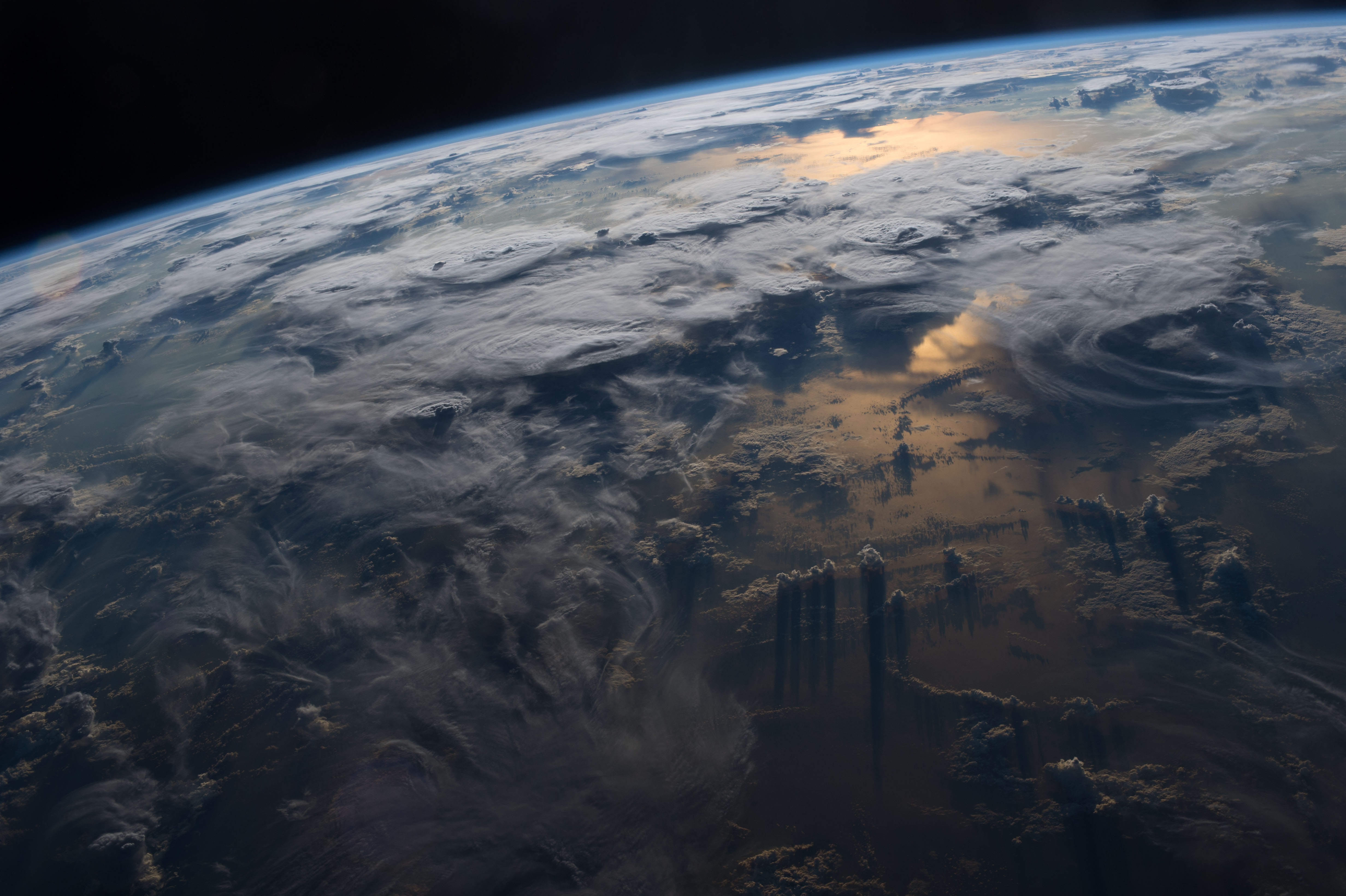
The troposphere operates on a principle of convective mixing, driven primarily by solar heating of the Earth's surface. Sunlight warms the ground, which in turn heats the air closest to it. This warmer, less dense air rises, while cooler, denser air from above sinks to take its place, creating a continuous cycle of vertical motion. This turbulent mixing, or convection, is why the troposphere is so dynamic and why most weather occurs here. The temperature generally decreases with altitude within the troposphere, a phenomenon known as the environmental lapse rate, until it reaches the tropopause, the boundary with the stratosphere. This temperature gradient is crucial for atmospheric stability and the formation of weather systems.
📊 Key Facts & Numbers
The troposphere accounts for approximately 80% of the total mass of Earth's atmosphere, a staggering figure that underscores its significance. Within this layer, over 99% of the atmosphere's water vapor and aerosols are concentrated. The average height of the troposphere varies dramatically: it's about 18 km (11 miles) high at the equator, 11 km (6.8 miles) in the mid-latitudes, and a mere 6 km (3.7 miles) over the poles during winter. This variation means that at the equator, the tropopause – the boundary between the troposphere and the stratosphere – sits at a much higher altitude than at the poles. The pressure at sea level within the troposphere is roughly 101.3 kilopascals (kPa), decreasing significantly with altitude.
👥 Key People & Organizations
The foundational work on the troposphere is largely credited to Léon Teisserenc de Bort, a Dutch meteorologist whose balloon experiments in the late 19th and early 20th centuries led to the discovery of the stratosphere and the definition of the troposphere. Modern research relies heavily on organizations like the World Meteorological Organization (WMO), which standardizes atmospheric measurements and classifications. Agencies like NASA and the European Space Agency (ESA) utilize satellites like the Terra and Aqua to monitor tropospheric conditions globally, providing crucial data for weather forecasting and climate studies. Atmospheric scientists like Richard Lindzen and Michael Mann have made significant contributions to understanding tropospheric dynamics and their role in climate change.
🌍 Cultural Impact & Influence
The troposphere is intrinsically linked to human culture and perception, as it is the layer where we live, breathe, and experience weather. The beauty of clouds, the fury of storms, and the clarity of a blue sky are all tropospheric phenomena that have inspired art, literature, and mythology for millennia. From ancient myths about sky gods to modern-day weather forecasting services like the National Weather Service (NWS), our relationship with the troposphere is constant. The development of aviation, particularly the pioneering flights of the Wright brothers, was entirely dependent on understanding tropospheric aerodynamics and weather. Even the concept of 'atmosphere' itself, as a vital, life-sustaining envelope, is primarily a reflection of our experience within this lowest layer.
⚡ Current State & Latest Developments
Current research in the troposphere is intensely focused on understanding and predicting the impacts of climate change. Scientists are observing significant shifts in tropospheric temperature and moisture content, with implications for extreme weather events. For instance, studies published by the Intergovernmental Panel on Climate Change (IPCC) in 2021 and 2023 highlight an observed warming trend in the troposphere, coupled with changes in precipitation patterns. The development of advanced climate models, such as those run by the National Center for Atmospheric Research (NCAR), aims to refine projections of future tropospheric behavior. Furthermore, efforts to monitor and mitigate air pollution, which is largely confined to the troposphere, remain a critical global priority, involving international agreements and national environmental agencies like the Environmental Protection Agency (EPA).
🤔 Controversies & Debates
A significant debate surrounds the precise rate of tropospheric warming and its attribution to human activities versus natural variability. While the overwhelming scientific consensus, as documented by the IPCC, points to anthropogenic greenhouse gas emissions as the primary driver, some critics, including those associated with think tanks like the Global Warming Policy Foundation, question the magnitude of human influence or the reliability of climate models. Another area of contention is the 'tropical tropospheric warming amplification' hypothesis, which suggests the tropics should warm faster than other regions due to feedback mechanisms, a prediction that has seen mixed observational support. The role of aerosols in influencing tropospheric temperature and cloud formation also remains a subject of ongoing research and debate, with varying effects depending on aerosol type and location.
🔮 Future Outlook & Predictions
The future of the troposphere is inextricably linked to global climate trajectories. Projections from the IPCC's Sixth Assessment Report (2021) indicate continued tropospheric warming throughout the 21st century, with the magnitude dependent on future greenhouse gas emission scenarios. This warming is expected to intensify extreme weather events, such as heatwaves, heavy rainfall, and droughts, with significant societal and economic consequences. Researchers are also exploring potential changes in atmospheric circulation patterns, including shifts in jet streams and storm tracks, which could alter regional climates dramatically. The development of more sophisticated climate models, incorporating higher resolution and improved representation of cloud physics, will be crucial for refining these future predictions and informing adaptation strategies.
💡 Practical Applications
The troposphere is the direct theater for a vast array of practical applications. Weather forecasting, from short-term predictions by services like AccuWeather to long-range climate outlooks, relies entirely on understanding tropospheric dynamics, temperature, pressure, and moisture. Aviation, a multi-trillion dollar global industry, depends on navigating tropospheric conditions, with pilots and air traffic controllers constantly monitoring wind, turbulence, and cloud cover. Agriculture is profoundly influenced by tropospheric weather patterns, dictating planting seasons, crop yields, and the risk of natural disasters. Furthermore, the study of atmospheric chemistry within the troposphere is vital for managing air quality, understanding the spread of pollutants from sources like vehicle emissions and industrial factories, and developing strategies for mitigation.
Key Facts
- Category
- science
- Type
- topic