
Contents
Overview
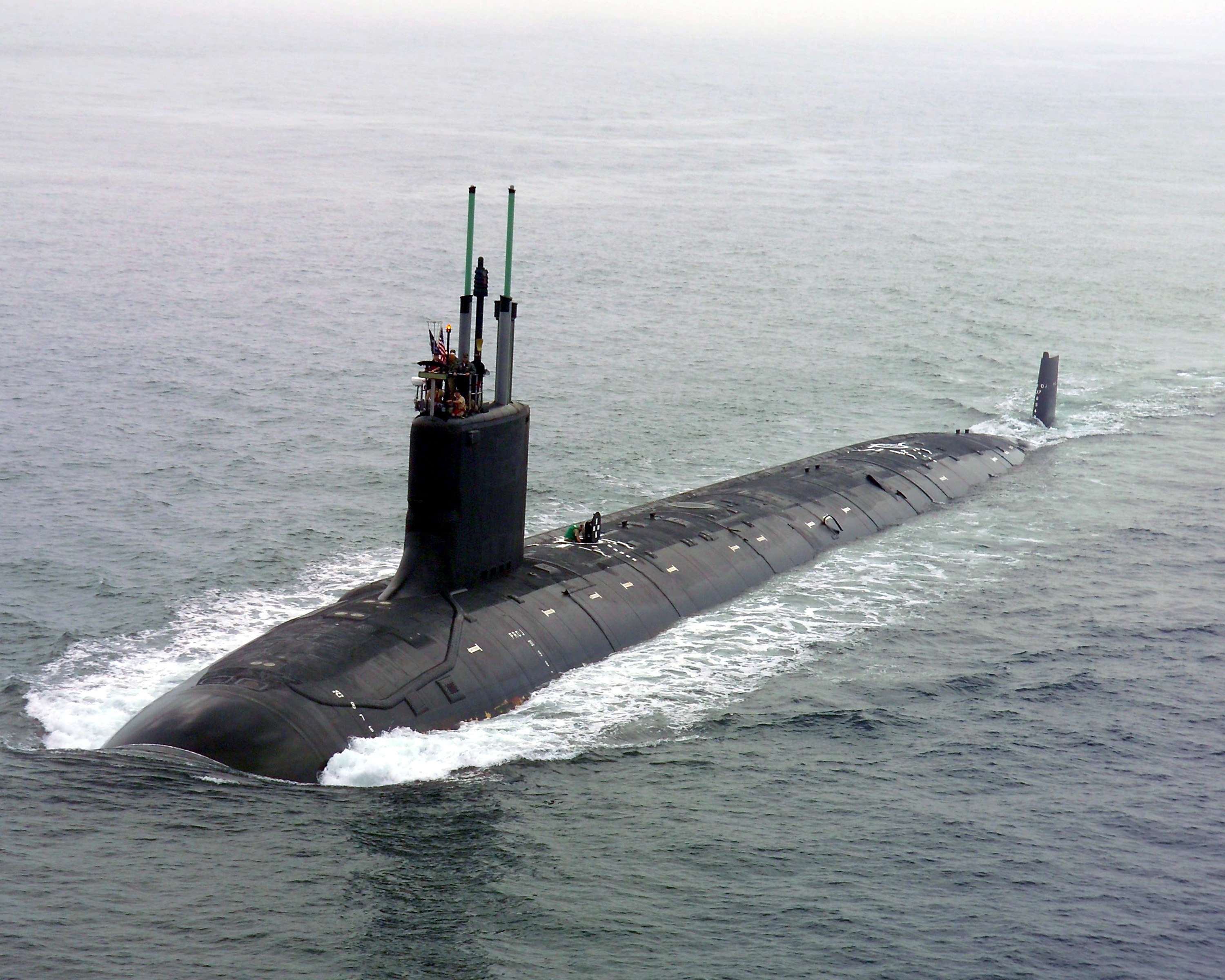
The Virginia-class (SSN-774) represents the pinnacle of modern undersea warfare technology for the U.S. Navy. Commissioned starting in 2003, these nuclear-powered attack submarines are designed for a diverse range of missions, from open-ocean anti-submarine warfare to intricate littoral operations and intelligence gathering. Built through a unique industrial partnership between General Dynamics Electric Boat and Newport News Shipbuilding, the Virginia class is engineered for stealth, speed, and sustained operational capability. With advanced sonar systems, vertical launch capabilities for cruise missiles, and a smaller crew size compared to previous classes, they are steadily replacing aging Los Angeles-class submarines and are poised to become the backbone of the U.S. submarine fleet, ensuring American dominance in the underwater domain for decades to come.
🎵 Origins & History
The genesis of the Virginia-class can be traced back to the late 1980s and early 1990s, as the U.S. Navy recognized the need for a new generation of attack submarines to counter evolving global threats and replace aging platforms. The design phase involved extensive collaboration between General Dynamics Electric Boat in Groton, Connecticut, and Newport News Shipbuilding in Virginia, a partnership crucial for maintaining the nation's nuclear shipbuilding industrial base. The lead ship, the USS Virginia (SSN-774), was laid down in 1999 and commissioned in 2004, marking a significant technological leap. Subsequent ships have been delivered at a steady pace, with the class now comprising the largest active submarine force in the U.S. Navy.
⚙️ How It Works
At its core, the Virginia-class is a marvel of stealth and power, driven by a nuclear reactor that provides virtually unlimited endurance, allowing the submarine to operate submerged for months at a time. Its hull design incorporates advanced quieting technologies, making it exceptionally difficult to detect. Unlike earlier submarines that relied on fixed torpedo tubes, the Virginia class features a Vertical Launch System (VLS) capable of deploying Tomahawk cruise missiles, Sub-Harpoon anti-ship missiles, and mines, alongside its primary armament of Mk 48 torpedoes. The submarine also boasts a sophisticated AN/BQQ-10 sonar suite, integrating multiple acoustic sensors for superior situational awareness, and a unmanned underwater vehicle deployment capability for extended reconnaissance and mine countermeasures.
📊 Key Facts & Numbers
The Virginia-class boasts impressive statistics that underscore its strategic importance. The total number of submarines planned is 49. Each submarine costs approximately $2.5 billion, with the total program projected to exceed $100 billion. These vessels are designed for a crew of 98 personnel, a significant reduction from the roughly 130 crew members on Los Angeles-class submarines, thanks to increased automation. Their operational depth is classified but is understood to be significantly greater than previous classes, enhancing survivability. The submarines are designed with a 33-year service life, with plans for a mid-life refueling and complex overhaul (RCOH) to extend their operational period to 45 years.
👥 Key People & Organizations
The development and operation of the Virginia-class involve key figures and entities within the U.S. defense industrial complex. General Dynamics Electric Boat and Newport News Shipbuilding are the primary builders, working under a unique teaming agreement established in 1991 to ensure the survival of both U.S. nuclear submarine construction yards. Notable figures in the Navy's leadership during its development included Admiral Hyman G. Rickover's successors who championed nuclear propulsion, and various program managers overseeing the complex engineering and acquisition process. The Department of Defense and the U.S. Congress provide the oversight and funding, while the U.S. Navy's Submarine Force Command dictates operational requirements and doctrine.
🌍 Cultural Impact & Influence
The Virginia-class has profoundly influenced naval strategy and public perception of undersea capabilities. Its advanced stealth and multi-mission capabilities have solidified the U.S. Navy's dominance in the underwater domain, influencing naval procurement decisions by other global powers like China and Russia. The submarines' presence in contested waters, often unacknowledged, serves as a potent deterrent and intelligence-gathering asset. While their operational details remain classified, their existence is a constant reminder of the sophisticated technological edge the U.S. maintains. The class has also become a symbol of American engineering prowess, featured in documentaries and military publications that highlight its advanced design and strategic significance.
⚡ Current State & Latest Developments
As of mid-2024, the Virginia-class fleet is fully operational and actively engaged in global deployments. The U.S. Navy continues to accept new hulls from the shipyards, with the latest Block V submarines incorporating enhanced capabilities, including the Virginia Payload Module (VPM), which significantly increases missile capacity. This module allows for the deployment of an additional seven Tomahawk cruise missiles or other payloads. The decommissioning of the USS Helena (SSN-725) in July 2025 will officially mark the Virginia class as the most numerous active submarine class in the world. Ongoing upgrades and modernization efforts focus on integrating new sensor technologies and improving cyber warfare capabilities to maintain their technological advantage against potential adversaries.
🤔 Controversies & Debates
The Virginia-class program has not been without its controversies. The substantial cost per submarine, exceeding $2.5 billion, has drawn criticism from defense budget hawks who argue for alternative naval investments. Debates also arise regarding the optimal number of submarines needed to meet global commitments, with some analysts suggesting the planned fleet of 49 may be insufficient. Furthermore, the reliance on a dual-shipyard construction model, while ensuring industrial base capacity, has been questioned for its potential inefficiencies compared to a single, consolidated facility. The classification surrounding their operational capabilities also fuels speculation and debate about their true effectiveness and the extent of their intelligence-gathering roles.
🔮 Future Outlook & Predictions
The future of the Virginia-class appears robust, with plans to continue production through the 2030s. The introduction of the Block V and subsequent Block VI variants, featuring the Virginia Payload Module (VPM), will significantly enhance their offensive capabilities. Beyond the current class, the U.S. Navy is already planning for the next generation of attack submarines, tentatively dubbed the SSN(X) program, which is expected to draw heavily on the lessons learned from the Virginia class. Projections suggest that the Virginia class will remain the cornerstone of the U.S. undersea warfare strategy for at least the next three decades, evolving with new technologies and adapting to emerging geopolitical challenges. The focus will likely shift towards greater automation, enhanced cyber resilience, and integration with unmanned systems.
💡 Practical Applications
The practical applications of the Virginia-class are vast and critical to national security. Their primary role is anti-submarine warfare, hunting and neutralizing enemy submarines. They are also employed for intelligence gathering, conducting covert surveillance and reconnaissance missions in denied waters. The ability to deploy Tomahawk cruise missiles makes them potent platforms for land attack missions, capable of striking targets hundreds of miles inland. In littoral environments, they can conduct special operations support, mine warfare, and reconnaissance. Their advanced sonar and stealth capabilities also make them ideal for mine countermeasures and seabed warfare operations, providing unparalleled access and awareness
Key Facts
- Category
- technology
- Type
- topic