
Contents
- 🌍 What is Earth's Weather?
- 🌡️ Key Atmospheric Components & Processes
- ☁️ Types of Weather Phenomena
- ⚡ Weather vs. Climate: A Crucial Distinction
- 📈 Historical Weather Records & Data
- 🔬 The Science Behind Weather Forecasting
- ⚠️ Extreme Weather Events & Impacts
- 💡 Understanding Your Local Weather Vibe
- 🌐 Global Weather Patterns & Influences
- 🚀 The Future of Weather Observation & Prediction
- Frequently Asked Questions
- Related Topics
Overview
Earth's weather is the immediate, day-to-day state of our planet's atmosphere, a complex dance of temperature, humidity, wind, and precipitation occurring primarily in the troposphere. It's the reason you check your weather app before heading out, the force behind a sudden downpour, or the crispness in the autumn air. Unlike the long-term averages that define climate, weather is the fleeting, tangible experience of atmospheric conditions at a specific moment and location. Understanding this dynamic system is fundamental to everything from daily planning to understanding larger environmental shifts.
🌡️ Key Atmospheric Components & Processes
The building blocks of weather are atmospheric gases like nitrogen and oxygen, but it's the interplay of water vapor, temperature gradients, and pressure systems that truly drives phenomena. Solar radiation is the ultimate energy source, heating the Earth's surface unevenly and initiating convection currents. Humidity, the amount of water vapor in the air, dictates the potential for clouds and precipitation. Air pressure differences create winds as air moves from high-pressure to low-pressure zones, a fundamental concept in atmospheric science.
☁️ Types of Weather Phenomena
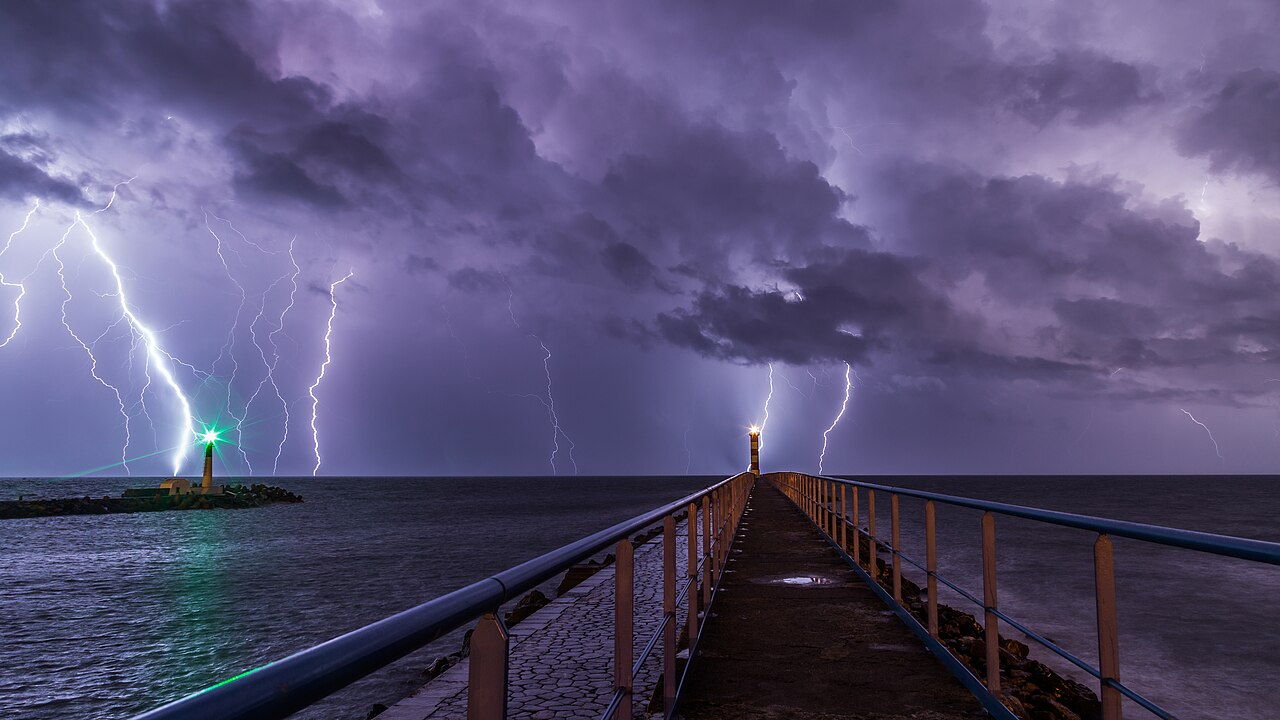
Weather manifests in a breathtaking array of forms, from gentle breezes and sunny skies to violent thunderstorms and blizzards. Common phenomena include rain, snow, sleet, and hail, all forms of precipitation types. Clouds, ranging from wispy cirrus to towering cumulonimbus, are visible indicators of atmospheric moisture and stability. Wind, a constant presence, can range from a mild zephyr to a destructive gale, shaping landscapes and influencing travel advisories.
⚡ Weather vs. Climate: A Crucial Distinction
It's crucial to distinguish weather from climate. Weather describes the atmospheric conditions over short periods—hours, days, or weeks—like today's temperature or tomorrow's forecast. Climate, on the other hand, represents the average weather patterns over much longer timescales, typically 30 years or more, and encompasses statistical variations. While a single heatwave is weather, a sustained increase in global average temperatures over decades is a climate trend.
📈 Historical Weather Records & Data
Our understanding of weather is built upon centuries of observation and record-keeping. Early weather instruments like the thermometer (invented by Gabriel Fahrenheit in 1714) and barometer (developed by Evangelista Torricelli in 1643) laid the groundwork. Modern meteorology relies on vast datasets from weather stations, satellites, and radar, allowing us to track historical events like the devastating 1900 Galveston hurricane or the widespread droughts of the Dust Bowl.
🔬 The Science Behind Weather Forecasting
Forecasting weather is a sophisticated blend of physics, mathematics, and computational power. Meteorologists use complex numerical weather prediction models that simulate atmospheric behavior based on current conditions. These models ingest data from a global network of sensors and are run on supercomputers. While forecasts have improved dramatically, inherent chaotic elements in the atmosphere mean predictions become less accurate further into the future, particularly for severe weather events.
⚠️ Extreme Weather Events & Impacts
Extreme weather events—hurricanes, tornadoes, floods, droughts, and heatwaves—pose significant threats to human life and infrastructure. The intensity and frequency of some of these events are increasingly linked to global warming, a subject of intense scientific debate and public concern. Understanding the dynamics of these extreme events is vital for disaster preparedness and mitigation strategies, impacting everything from insurance rates to urban planning.
💡 Understanding Your Local Weather Vibe
Your local weather 'vibe' is a unique blend of regional geography, prevailing wind patterns, and seasonal cycles. Coastal areas often experience maritime climates influenced by ocean currents, while inland regions might face greater temperature extremes. Mountainous terrain can create localized microclimates due to elevation and topography. Recognizing these local influences helps you better interpret forecasts and understand why your area experiences specific weather patterns, from the predictable monsoon season to the rare blizzard.
🌐 Global Weather Patterns & Influences
Global weather is interconnected, with large-scale atmospheric circulation patterns dictating regional conditions. Phenomena like the El Niño-Southern Oscillation (ENSO) can influence weather patterns across continents, causing droughts in some regions and heavy rainfall in others. Jet streams, fast-flowing air currents high in the atmosphere, steer weather systems and can lead to significant shifts in temperature and precipitation over large areas, demonstrating the planet's interconnected atmospheric system.
🚀 The Future of Weather Observation & Prediction
The future of weather observation and prediction is being shaped by advancements in artificial intelligence, machine learning, and an ever-increasing density of observational data. AI is showing promise in improving short-term forecasts (nowcasting) and identifying subtle patterns in historical data that human analysts might miss. The development of more sophisticated sensors and global monitoring networks aims to provide even more granular and accurate real-time data, potentially leading to better warnings for extreme weather and a deeper understanding of our planet's dynamic atmosphere.
Key Facts
- Year
- -3000
- Origin
- Ancient Greece (Aristotle's 'Meteorologica')
- Category
- Natural Phenomena
- Type
- Topic
Frequently Asked Questions
What's the difference between weather and climate?
Weather refers to the short-term atmospheric conditions at a specific place and time, like today's temperature or rain. Climate, conversely, is the long-term average of weather patterns over decades, typically 30 years or more. Think of weather as your mood today and climate as your personality over a lifetime.
How accurate are weather forecasts?
Modern weather forecasts are remarkably accurate for the short term (1-3 days), thanks to advanced computer models and extensive data. However, accuracy decreases significantly beyond 7-10 days due to the chaotic nature of the atmosphere. Predicting severe weather events also presents unique challenges.
What are the main drivers of weather?
The primary driver is solar radiation, which heats the Earth unevenly, creating temperature and pressure differences. These differences drive air movement (wind) and the water cycle (evaporation, condensation, precipitation). The Earth's rotation also plays a significant role in shaping large-scale weather patterns through the Coriolis effect.
Can weather be predicted on a global scale?
Yes, global weather patterns are monitored and predicted using complex numerical weather prediction models. Large-scale phenomena like El Niño-Southern Oscillation (ENSO) and jet streams have far-reaching impacts, influencing weather across continents, though precise local predictions remain challenging.
How does humidity affect weather?
Humidity, the amount of water vapor in the air, is critical for weather. High humidity means more moisture is available for cloud formation and precipitation (rain, snow, hail). It also influences how temperature feels to us; high humidity can make warm temperatures feel hotter and cold temperatures feel colder.
What is the role of the troposphere in weather?
The troposphere is the lowest layer of Earth's atmosphere, extending from the surface up to about 7-20 km (4-12 miles). It's where virtually all weather phenomena occur because it contains most of the atmosphere's water vapor and is heated from below by the Earth's surface. This is where clouds form and precipitation falls.